
Welcome to this deep dive into the twelfth chapter of the Epistle to the Hebrews, a masterpiece of pastoral exhortation that bridges the gap between ancient faith and modern endurance. Together, we will unpack the imagery of the “cloud of witnesses,” the necessity of divine discipline, and the call to live in the unshakable kingdom of God.
Hebrews 12 — Historical and Spiritual Context
The Epistle to the Hebrews was likely written to Jewish Christians facing intense persecution and the temptation to revert to the old Mosaic system to avoid social ostracization. Composed before the destruction of the Jerusalem Temple in A.D. 70, the author uses this letter to demonstrate the absolute supremacy of Jesus Christ over the Law, the prophets, and the angels. You can read Hebrews 12 on Bible Gateway to ground yourself in the text.
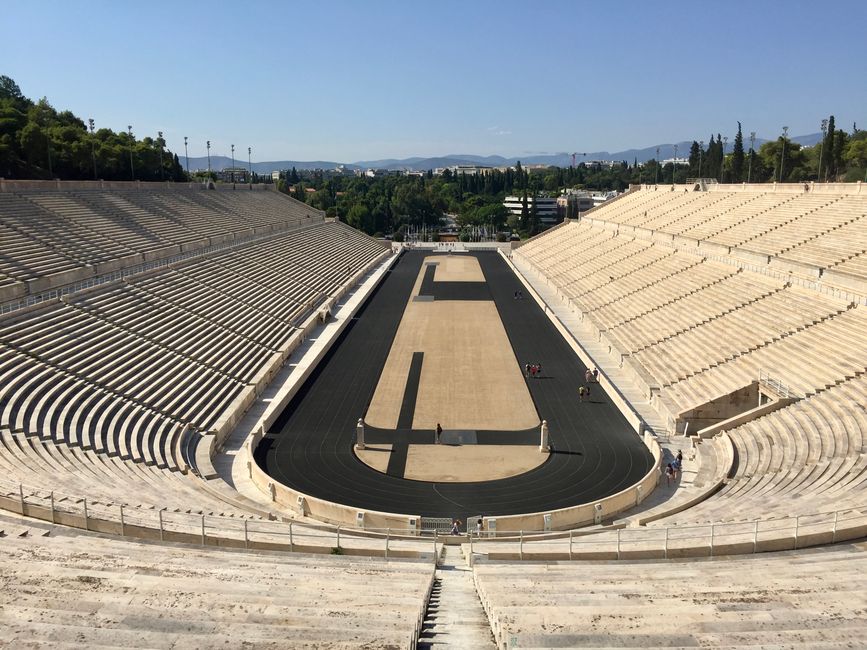
The overarching theme of Hebrews 12 is the call to perseverance through faith, framed by the metaphor of an athletic contest and the reality of fatherly discipline. It serves as a bridge from the “Hall of Faith” in chapter 11 to the practical, daily walk of the believer. It is vital today because it reminds us that suffering is not a sign of God’s abandonment, but rather a profound indicator of our status as His beloved children.
Verse-by-Verse Commentary on Hebrews 12
Hebrews 12:1 — Meaning and Explanation
“Wherefore seeing we also are compassed about with so great a cloud of witnesses, let us lay aside every weight, and the sin which doth so easily beset us, and let us run with patience the race that is set before us.”
The “cloud of witnesses” refers back to the saints mentioned in Hebrews 11, whose lives testify to the power of faith. The Greek word for “witnesses” is *martys* (Strong’s G3144), from which we get our English word “martyr.” They are not merely spectators watching us; they are testifiers whose lives prove that God is faithful to those who trust Him.
The exhortation to “lay aside every weight” (*onkos*, G3591) implies that some things are not inherently sinful but are unnecessary burdens that hinder spiritual progress. The “sin which doth so easily beset us” (*euperistatos*, G2131) is a unique word meaning “well-standing around” or “cleverly surrounding.” It describes a sin that, like a tight garment, traps us and prevents us from running the race effectively.

Hebrews 12:2 — Meaning and Explanation
“Looking unto Jesus the author and finisher of our faith; who for the joy that was set before him endured the cross, despising the shame, and is set down at the right hand of the throne of God.”
This verse anchors the believer’s focus. The term “author” (*archēgos*, G747) can mean pioneer, captain, or founder. Jesus is the one who blazed the trail of faith. As the “finisher” (*teleiōtēs*, G5051), He is the one who brings that faith to its ultimate perfection. He is both the starting point and the goal of our spiritual journey.
The “joy that was set before him” is the paradox of the cross; Jesus saw past the agony of the crucifixion to the resurrection and the redemption of His people. By “despising the shame,” He treated the social humiliation of the cross as nothing compared to the glory of completing the Father’s will. We are called to gaze upon Him when our own paths become arduous.
Hebrews 12:6 — Meaning and Explanation
“For whom the Lord loveth he chasteneth, and scourgeth every son whom he receiveth.”
This verse provides the theological framework for understanding suffering. The word “chasteneth” (*paideuō*, G3811) comes from the root *pais*, meaning “child.” It refers to the training, instruction, and correction a father gives to his child to ensure they reach maturity. It is not punitive vengeance, but pedagogical love.
The term “scourgeth” (*mastigoō*, G3146) is intense, suggesting that God’s correction can be painful and deeply felt. However, the author insists that this is the hallmark of legitimacy. If we are never corrected, we are “bastards” (illegitimate) and not sons. The spiritual lesson is that trials are proof of divine paternity; God is actively forming our character because He intends for us to inherit His kingdom.

Hebrews 12:28 — Meaning and Explanation
“Wherefore we receiving a kingdom which cannot be moved, let us have grace, whereby we may serve God acceptably with reverence and godly fear.”
As the chapter concludes, it draws a contrast between the shaking of the physical world and the stability of the Kingdom of God. The “kingdom which cannot be moved” (*asaleutos*, G761) is the ultimate reality for the believer. Because our foundation is unshakable, we are empowered to live with a different set of priorities than the world.
The call to “serve God acceptably” uses the word *latreuō* (G3000), which refers to priestly or religious service. Our entire lives, when lived in light of the Kingdom, become an act of worship. “Reverence and godly fear” are the necessary attitudes for this service, acknowledging that while God is our Father, He is also the consuming fire who demands our total devotion. You can explore further linguistic nuances on Blue Letter Bible.
How to Apply Hebrews 12 in Your Daily Life
Applying Hebrews 12 begins with a daily audit of your “weights.” In your family life, this might mean identifying activities or digital distractions that, while not sinful, consume the time and emotional energy needed for deeper connection with your spouse or children. By “laying aside” these weights, you create space for the intentional, patient race of raising a godly family.
In the workplace, remember that “chastening” can manifest as difficult bosses, failed projects, or professional setbacks. Instead of viewing these as mere misfortune, treat them as training grounds. If you are struggling with a difficult colleague, apply verse 2 by “looking unto Jesus”—consider how He handled betrayal and injustice. This shift in perspective transforms a hostile work environment into a classroom for developing the fruit of the Spirit, such as patience and self-control.
A Prayer Based on Hebrews 12
Guided Scriptural Prayer
Heavenly Father, I thank You that I am running a race marked out for me by Your own hand. Help me to lay aside every weight and the sin that so easily ensnares me, so that I may fix my eyes solely on Jesus, the author and finisher of my faith. When I encounter trials, remind me that You are disciplining me as a beloved child, not because You are angry, but because You are perfecting me. Grant me the grace to serve You with reverence and godly fear in all my daily tasks. May my life be a testament to the unshakable kingdom I have received in Christ. Amen.
Frequently Asked Questions About Hebrews 12
What is the main message of Hebrews 12?
The main message of Hebrews 12 is the call to endurance through faith. By drawing parallels to an athletic race, the author encourages Christians to persevere through suffering and discipline. The chapter emphasizes that Jesus is the ultimate example of endurance, having suffered the cross for the joy of redemption. It concludes by reminding believers that they are part of an “unshakable kingdom,” which should inspire them to live with gratitude, reverence, and holy obedience in the face of a world that is passing away.
Who wrote Hebrews and why?
While the author of Hebrews is traditionally thought to be the Apostle Paul, most modern scholars remain uncertain, noting the unique, polished Greek style. Regardless of the human author, the purpose is clear: to prevent Jewish Christians from “drifting away” from the Gospel back into the rituals of the Mosaic Law. The book was written to prove that Jesus is superior to all elements of the Old Covenant, urging the audience to hold fast to their confession during times of persecution and spiritual fatigue.
What does “God is a consuming fire” mean in Hebrews 12:29?
This phrase, quoting Deuteronomy 4:24, serves as a sobering conclusion to the warning against rejecting God’s grace. It highlights the holiness and majesty of God. In the context of Hebrews 12, it suggests that God’s presence is both a comfort to those who follow Him and a terrifying reality to those who spurn His grace. It reminds us that our worship and service must be tempered by “godly fear,” acknowledging that our God is not a casual acquaintance but the sovereign Creator who purifies His people through His holy nature.
May the peace of God, which surpasses all understanding, guard your heart and mind as you run your race with endurance.