
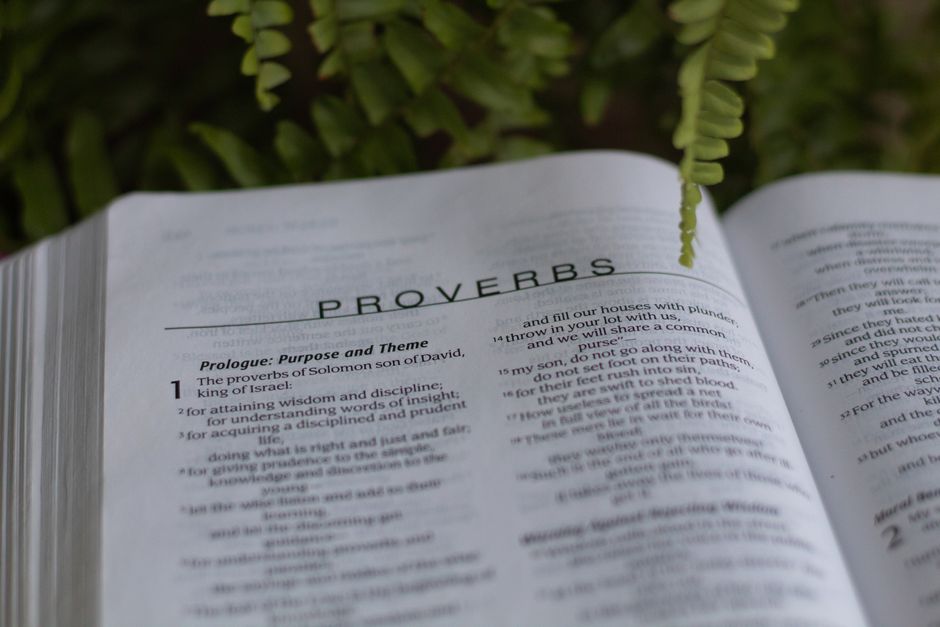
Welcome to this deep dive into one of the most profound moments in all of Scripture: the moment God finally breaks the silence. As we explore Job 38, we transition from the human arguments of Job and his friends to the transcendent wisdom of the Almighty, discovering how His sovereignty provides the ultimate anchor for our souls in times of suffering.
Job 38 — Historical and Spiritual Context
Job 38 marks the dramatic climax of the book, where God answers Job out of a whirlwind. Scholars generally date the composition of this wisdom literature to the patriarchal age, likely preceding the Mosaic Law, given the lack of references to the Levitical priesthood or the Tabernacle. It serves as a courtroom scene where the Creator addresses the creature, shifting the focus from Job’s personal agony to the unfathomable majesty of the divine order.
Theologically, this chapter challenges the human tendency to demand an explanation for suffering from an infinite God. It teaches the believer that while we may not understand the “why” of our trials, we can trust the “Who” behind the creation. By contrasting Job’s finite knowledge with God’s omnipotence, the chapter invites us to move from questioning God’s justice to worshiping His sovereignty. You can read Job 38 on Bible Gateway to prepare your heart for this study.

Verse-by-Verse Commentary on Job 38
Job 38:4 — Meaning and Explanation
“Where wast thou when I laid the foundations of the earth? declare, if thou hast understanding.”
In this verse, God begins His interrogation by challenging Job’s perspective on the origin of the cosmos. The Hebrew word for “foundations” is yacad (Strong’s H3245), implying a firm, established base. By asking “Where wast thou?”, the Lord humbles Job, reminding him that he was not present at the dawn of time, nor did he participate in the architectural design of the universe.
The spiritual lesson here is one of creaturely humility. We often view our lives as the center of the universe, forgetting that God has been working out His redemptive plan since before the foundations of the world. When we feel overwhelmed by our circumstances, we must remember that the God who built the earth from nothing is more than capable of sustaining our small, temporary lives.
Job 38:11 — Meaning and Explanation
“And said, Hitherto shalt thou come, but no further: and here shall thy proud waves be stayed?”
God speaks here of the boundaries He set for the ocean, using the imagery of a sovereign commander. The word “stayed” comes from the Hebrew shith, meaning to be set or appointed. God asserts that even the most chaotic, powerful forces of nature—the “proud waves”—are subject to His absolute, governing authority.
For the reader, this is a profound comfort. If God can command the violent, crashing waves of the sea to stop at a specific shoreline, He can certainly command the “waves” of our anxiety, grief, and temptation. Nothing in your life is “out of control” because the One who set the boundaries of the ocean is the same One who numbers the hairs on your head.

Job 38:31 — Meaning and Explanation
“Canst thou bind the sweet influences of Pleiades, or loose the bands of Orion?”
The Lord directs Job’s attention to the constellations, specifically the Pleiades and Orion. The “sweet influences” refers to the Hebrew ma’adannah, implying binding or knotting. God is contrasting His cosmic power with Job’s inability to manipulate the celestial bodies. He is the Master Astronomer who orchestrates the movement of stars and galaxies with perfect, mathematical precision.
If God is preoccupied with the intricate details of the heavens, how much more is He attentive to the details of your life? We often worry about the “stars” of our lives—our future, our children, our health—but this verse invites us to rest in the realization that the God who holds the constellations in their places is the same God who holds our future in His hands.
Job 38:33 — Meaning and Explanation
“Knowest thou the ordinances of heaven? canst thou set the dominion thereof in the earth?”
The “ordinances” (Hebrew: chuqqah, Strong’s H2708) refer to the fixed, unchanging laws of nature that God established. God asks if Job understands the legislative power that keeps the universe running. This is a rhetorical question designed to show that God is not only the Creator but also the Sustainer and Lawgiver of all existence.
The application for us is to recognize that we live in a world governed by God’s wisdom, not by random chance. When life feels chaotic or lawless, we are reminded that there is a higher, divine order. We are called to submit to these “ordinances” of heaven, trusting that God’s way is always higher than our own limited understanding.

How to Apply Job 38 in Your Daily Life
Applying Job 38 to your daily life begins with a radical shift in perspective. In the workplace, when you face a project that seems impossible or a boss who is unreasonable, stop and remember that your ultimate “Boss” is the Creator of the constellations. Instead of reacting with panic, practice the discipline of “divine perspective”—taking a deep breath and acknowledging that God is currently sustaining the universe, and He is fully capable of sustaining your career path.
In your family life, use the lessons of this chapter to handle conflict or uncertainty. When your children are going through struggles or you are facing financial instability, gather your family and read these verses. Remind one another that just as God sets the boundaries for the ocean, He sets the boundaries for our trials. This prevents the “waves” of domestic stress from breaking your spirit. By anchoring your home in the sovereignty of God, you turn your living room into a sanctuary of trust rather than a place of anxiety.
A Prayer Based on Job 38
Guided Scriptural Prayer
Heavenly Father, I stand in awe of Your majesty, realizing that I am but a small part of Your vast and beautiful creation. Like Job, I have often questioned Your ways, but today I humble myself before Your sovereign throne. Thank You for setting the boundaries for the waves in my life and for holding the stars in their places with such care. Help me to trust Your ordinances even when I cannot see the path forward. May I find rest in the knowledge that the One who laid the foundations of the earth is also the One who holds my life in His hands. Amen.
Frequently Asked Questions About Job 38
What is the main message of Job 38?
The main message of Job 38 is that God’s wisdom and sovereignty are far beyond human comprehension. By questioning Job about the creation and maintenance of the universe, God demonstrates that humans lack the perspective and authority to judge His actions. The chapter serves to silence human complaints by contrasting our finite existence with God’s infinite power, ultimately leading us to a place of humble worship and total trust in His divine governance over all things.
Who wrote Job and why?
While the author of Job is traditionally attributed to Moses or an unknown wise man from the patriarchal era, the book’s primary purpose is to explore the mystery of human suffering and the character of God. It addresses the “theodicy” question—if God is good and all-powerful, why do the righteous suffer? Job 38 is the turning point where the author shows that the answer to suffering is not found in human logic, but in an encounter with the living God.
What does “sweet influences of Pleiades” mean in Job 38:31?
The phrase “sweet influences of Pleiades” refers to the astronomical cluster of stars known as the Pleiades. In the ancient Near Eastern context, these stars were often associated with the coming of spring and the renewal of life. By asking if Job can “bind” them, God is emphasizing that He alone controls the seasons and the natural cycles of life. It serves as a reminder that the timing of our “seasons”—our periods of growth, harvest, and rest—is entirely in the hands of the Creator.
May the peace of the Almighty, who commands the dawn and holds the stars, be with you as you walk in the light of His sovereign love.