
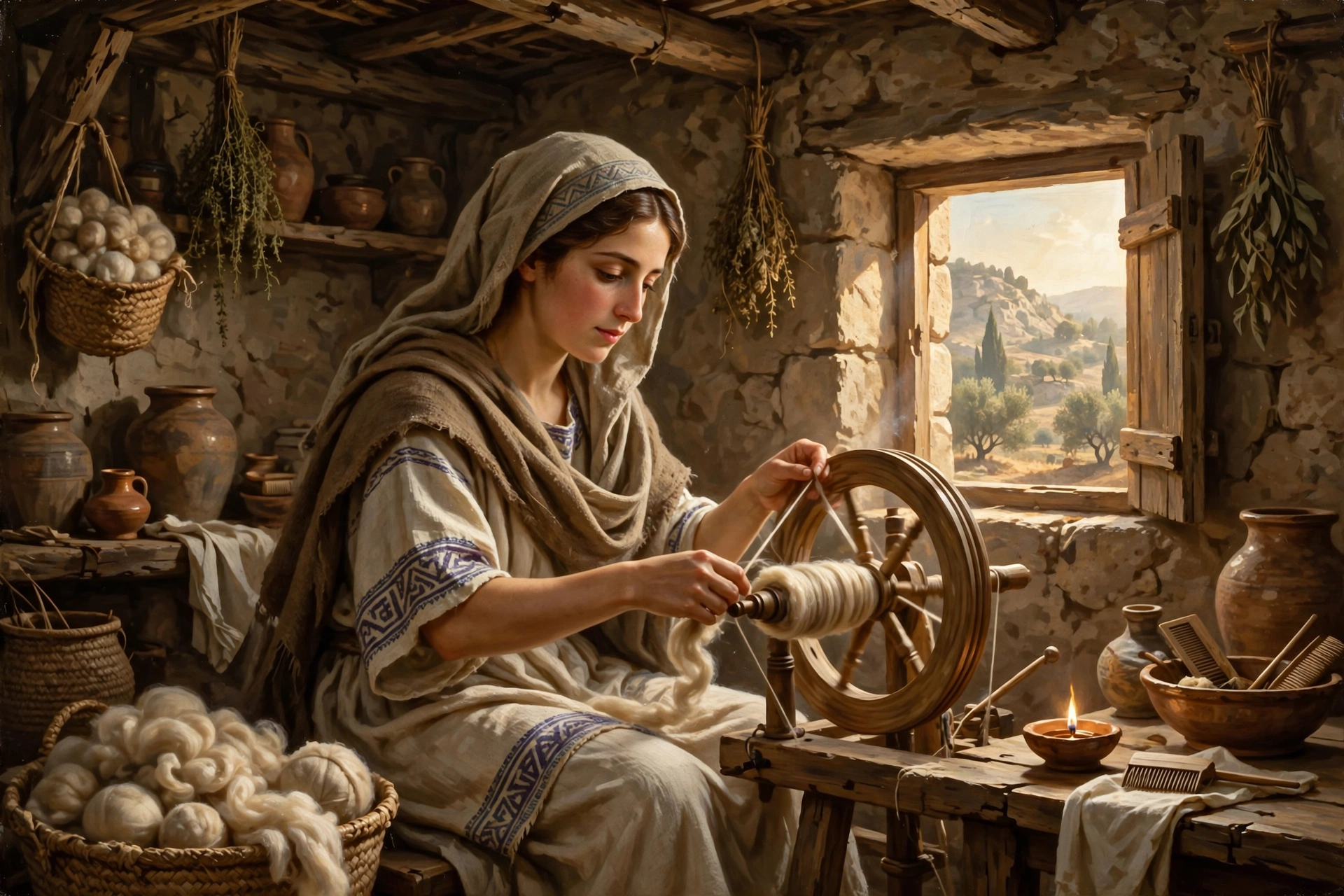
Proverbs 31 – Historical and Spiritual Context
Proverbs 31 stands as the majestic conclusion to the book of Proverbs, traditionally attributed to King Lemuel, who recorded the wisdom his mother taught him. Unlike the earlier chapters that focus on the dangers of the “forbidden woman,” this final passage serves as a grand acrostic poem in the Hebrew alphabet, painting an idealized portrait of the “Eshet Chayil”—the woman of valor. Historically, this text was not merely a domestic manual for ancient Israelite women; it was a hymn of praise meant to be recited in the home, honoring the woman whose life is anchored in divine wisdom. It transitions the reader from the theoretical pursuit of wisdom to its practical, flesh-and-blood manifestation in the complexities of family, commerce, and community life.
Spiritually, the chapter transcends gender, serving as a blueprint for every believer—regardless of status or role—to live a life of intentionality, industry, and integrity. While it outlines the virtues of a godly wife and mother, the overarching theme is the “fear of the Lord” as the engine of all true excellence. The virtuous woman is not defined by her perfection or her possessions, but by the fact that her internal life is governed by a reverent submission to God. Ultimately, Proverbs 31 acts as a mirror, inviting us to evaluate how our daily labor and relationships reflect the transformative power of God’s wisdom in a fallen world.
Detailed Verse-by-Verse Commentary
Study of Proverbs 31:10
“An excellent wife who can find? She is far more precious than jewels.”
The Hebrew term used here for “excellent” is chayil, which carries the connotation of strength, might, and military valor. It is the same word often used to describe a warrior going into battle. By using this word, the author elevates the role of the virtuous woman from a mere domestic helper to a person of profound spiritual and moral fortitude. To be “far more precious than jewels” suggests that her value is not extrinsic—based on what she produces or how she looks—but intrinsic, stemming from her character. In a culture that often reduces women to their utility, this verse declares that a person of godly character is the rarest and most valuable treasure in the kingdom of God.
Study of Proverbs 31:25
“Strength and dignity are her clothing, and she laughs at the time to come.”
This verse provides a beautiful contrast between the external and internal. While the world focuses on outward adornment, the woman of valor is clothed in “strength” (oz—might or power) and “dignity” (hadar—splendor or majesty). This internal armor allows her to “laugh at the time to come.” This is not a laugh of arrogance or ignorance, but a laugh of profound trust. Because she has built her life upon the foundation of the fear of the Lord, she is not paralyzed by the anxieties of the future. She possesses a holy confidence that even if trials come, the God who guided her yesterday will remain faithful tomorrow.
Study of Proverbs 31:30
“Charm is deceitful, and beauty is vain, but a woman who fears the Lord is to be praised.”
This verse serves as the theological pivot point of the entire chapter. The Hebrew word for “vain” (hebel) is the same word used in Ecclesiastes to describe things that are fleeting, like a mist or a vapor. The author warns that relying on outward appearance or superficial charisma is like trying to hold onto smoke; it cannot sustain a life or a legacy. The “fear of the Lord” (yirah) is the antidote to vanity. It is a deep, reverent awe that dictates one’s priorities. The verse concludes that true praise is reserved not for those who conform to worldly standards of beauty, but for those whose hearts are tethered to the Creator, as this is the only beauty that survives the test of eternity.
Practical Application for Your Daily Life
Applying Proverbs 31 in the modern era begins by shifting our focus from the “to-do list” of the virtuous woman to the “heart-set” that drives her. You can practice this by viewing your daily work—whether in the office, the classroom, or the home—as an act of worship. Just as the woman of valor manages her household with wisdom and care, you are called to be a steward of your time, talents, and resources. Start small: cultivate intentionality in how you serve your family and colleagues, seek to be a source of strength rather than complaint, and prioritize your spiritual growth. Let your daily labor be an expression of your devotion to God, recognizing that what you do in secret, when done with a heart of integrity, is what truly builds a lasting legacy.
Furthermore, combat the anxiety of the modern age by practicing the “holy laughter” mentioned in verse 25. We live in a culture of constant worry, yet you can choose to clothe yourself in the dignity of God’s promises. When you feel overwhelmed by the future, pause to reflect on the fear of the Lord. Ask yourself, “Is my trust in my own ability to control outcomes, or is it in the character of God?” By grounding your identity in Him rather than in your accomplishments or your appearance, you will find that you can walk through life’s uncertainties with a calm, unshakable grace that points others toward the Gospel.
Daily Prayer and Reflection
Guided Scriptural Prayer
Heavenly Father, I thank You for the gift of Your Word and the timeless wisdom found in Proverbs 31. Grant me the grace to cultivate a spirit of valor and strength that is rooted deeply in the fear of You, rather than the fleeting trends of this world. Help me to clothe my heart with dignity and trust, so that I may face the future with confidence instead of anxiety. May my daily work and my interactions with others be a reflection of Your love and integrity. Let my life be a testament to the truth that true beauty is found in a heart that belongs entirely to You.
<hr />
<p style=”text-align: center; color: #64748b; font-size: 14px; font-style: italic;”>We hope this study guide on Proverbs 31 blessed your day.</p>