
Welcome to this deep dive into the Word of God; it is a joy to walk alongside you as we uncover the timeless wisdom found in the rebuilding of Jerusalem’s walls. In this study of Nehemiah 4, we will explore the anatomy of spiritual opposition, the necessity of diligent prayer, and the divine strategy for maintaining focus when the world seeks to distract us from our God-given purpose.
Nehemiah 4 — Historical and Spiritual Context
Nehemiah 4 takes place during the mid-5th century B.C., shortly after Nehemiah returned to Jerusalem to rebuild its shattered walls. The historical context is one of intense geopolitical tension; Nehemiah faces fierce opposition from Sanballat the Horonite, Tobiah the Ammonite, and Geshem the Arabian, who represent the surrounding pagan powers threatened by the restoration of Jewish autonomy and faith. Read Nehemiah 4 on Bible Gateway to ground yourself in the narrative of these persistent adversaries.
The overarching theological theme of Nehemiah 4 is that the work of God will inevitably face the resistance of the enemy, yet this opposition is the very catalyst for the believer’s total dependence on the Lord. It serves as a profound archetype for the spiritual warfare every Christian faces today—whether in building a family, serving in ministry, or pursuing personal holiness. This chapter teaches us that “watchfulness” and “work” are not mutually exclusive, but rather the dual wings upon which the believer’s success takes flight.

Verse-by-Verse Commentary on Nehemiah 4
Nehemiah 4:4 — Meaning and Explanation
“Hear, O our God; for we are despised: and turn their reproach upon their own head, and give them for a prey in the land of captivity:”
When Nehemiah hears the mockery of his enemies, he does not respond with physical violence or defensive retorts; he turns immediately to prayer. The Hebrew word for “despised” is bazah (Strong’s H959), implying a sense of being held in utter contempt or treated as worthless. By bringing this to God, Nehemiah acknowledges that the insult is not merely against the workers, but against the God they serve.
In this imprecatory prayer, Nehemiah is not acting out of personal spite but out of a desire for divine justice. He recognizes that his enemies are attempting to derail a work ordained by Heaven. The spiritual lesson here is vital: when we face ridicule for our faith or our efforts to serve the Lord, our first instinct must be to “hand the case over” to the Judge of all the earth. We are invited to bring our hurts and the insults of others into the sanctuary of prayer rather than harboring them in our hearts.
Nehemiah 4:6 — Meaning and Explanation
“So built we the wall; and all the wall was joined together unto the half thereof: for the people had a mind to work.”
This verse highlights the incredible synergy between divine leadership and a willing people. The phrase “a mind to work” is translated from the Hebrew leb (Strong’s H3820), meaning “heart.” It suggests that the people did not just work with their hands; they were emotionally and spiritually invested in the task. Their unity was the secret weapon that defied the intimidation tactics of Sanballat.
For the modern believer, this serves as a reminder that the church—the spiritual wall of our society—is only as strong as the collective heart of its members. When the people of God are united in purpose and heart, the “gaps” in the wall begin to close. True spiritual progress is not achieved by the strength of one leader alone, but by the shared, heartfelt commitment of every believer to the task God has assigned to them.
Nehemiah 4:14 — Meaning and Explanation
“And I looked, and rose up, and said unto the nobles, and to the rulers, and to the rest of the people, Be not ye afraid of them: remember the Lord, which is great and terrible, and fight for your brethren, your sons, and your daughters, your wives, and your houses.”
Nehemiah’s command to “remember the Lord” acts as a spiritual anchor against the rising tide of fear. The word “terrible” here refers to the Hebrew yare (Strong’s H3372), which connotes a sense of awe, reverence, and overwhelming majesty. Nehemiah knew that if the people focused on the size of their enemies, they would crumble, but if they focused on the size of their God, they would conquer.
This is the ultimate antidote to anxiety. Whenever we face overwhelming obstacles—whether it be financial crisis, family breakdown, or workplace persecution—we must shift our gaze. By remembering that our God is “great and terrible” (in the sense of His omnipotence), our earthly struggles are put into their proper perspective. We are called to fight not just for our own comfort, but for the legacy of our families and the integrity of our households.
Nehemiah 4:17 — Meaning and Explanation
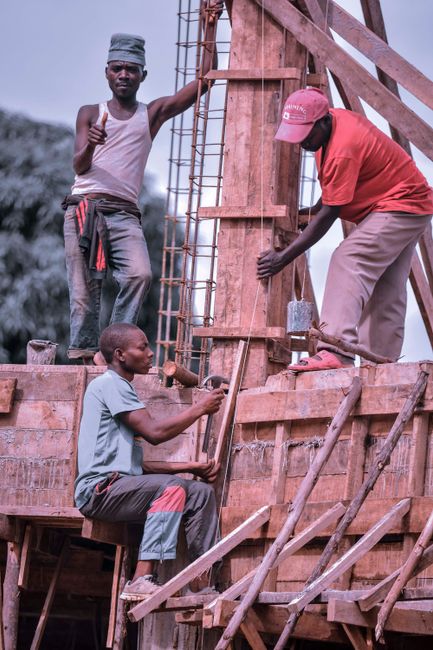
“They which builded on the wall, and they that bare burdens, with those that laded, every one with one of his hands wrought in the work, and with the other hand held a weapon.”
This iconic image of the builder holding a trowel in one hand and a sword in the other illustrates the reality of the Christian life. The “work” is the advancement of the Kingdom, and the “weapon” is the Word of God, which is the sword of the Spirit (Ephesians 6:17). We are never called to be idle; we are called to be productive while remaining vigilant against the schemes of the enemy.
The theological implication is profound: we cannot afford to be so heavenly-minded that we are of no earthly good, nor can we be so focused on earthly tasks that we neglect our spiritual defenses. A Christian who works without prayer is vulnerable, and a Christian who prays without working is negligent. True maturity is found in the balance of active service and constant, watchful reliance on the armor of God.
How to Apply Nehemiah 4 in Your Daily Life
Applying Nehemiah 4 in the modern age requires us to adopt the “trowel and sword” mentality. In your professional life, this means performing your duties with excellence—showing up on time, being honest, and working hard—while simultaneously carrying your “weapon” of prayer. When a coworker mocks your values or a project seems designed to compromise your integrity, do not react with anger. Instead, pray silently, hold fast to your biblical convictions, and continue to produce high-quality work that acts as a testimony to your Lord.
In your family life, “rebuilding the wall” means protecting your home from the cultural influences that seek to erode faith. Just as Nehemiah encouraged the families to fight for their sons and daughters, you must be intentional about creating a spiritual fortress. This involves setting boundaries on media consumption, prioritizing family worship, and teaching your children to “remember the Lord” when they encounter bullying or peer pressure. Remember that you are not building alone; you are part of a larger community of believers, and your commitment to your home strengthens the entire body of Christ.
A Prayer Based on Nehemiah 4
Guided Scriptural Prayer
Heavenly Father, I come before You acknowledging that the work You have set before me is often met with resistance and discouragement. Like Nehemiah, I ask that You would keep my heart fixed on Your greatness rather than the magnitude of my obstacles. Help me to labor with diligence, keeping one hand in the work and the other ready with the sword of Your Word, that I may remain watchful against the enemy’s schemes. When I am despised or mocked for my faith, remind me to bring those burdens to You, trusting in Your perfect justice and sovereign timing. May my life be a wall that stands firm for the sake of my family and my community, all for Your glory. Amen.
Frequently Asked Questions About Nehemiah 4
What is the main message of Nehemiah 4?
The main message of Nehemiah 4 is that spiritual progress and godly work will inevitably trigger opposition, but this opposition is overcome through a combination of prayer, faith, and practical vigilance. Nehemiah teaches the reader that we must not stop working when threatened; instead, we must rely on the Lord’s strength while remaining alert. The chapter emphasizes that our defense is found in remembering who God is (His greatness and power) and standing united with our brothers and sisters in the common task of building His kingdom.
Why did the people have to carry weapons while building in Nehemiah 4?
The people carried weapons in Nehemiah 4:17 because their enemies—Sanballat, Tobiah, and the neighboring nations—had formed a physical conspiracy to attack Jerusalem and stop the wall’s construction. The threat was not just verbal mockery; it was an imminent danger of physical violence. By holding a weapon in one hand and a tool in the other, the builders demonstrated a dual commitment: they were determined to finish the work God assigned them, but they were also prepared to defend their families and their holy city against the adversary’s aggression.
What does “they had a mind to work” mean in Nehemiah 4:6?
The phrase “they had a mind to work” signifies that the people of Israel were unified by a shared heart and a clear sense of divine purpose. In the Hebrew text, the word for “mind” refers to the heart, suggesting that their motivation was not forced or administrative, but deeply personal and passionate. Because the people were emotionally invested in the restoration of Jerusalem, they were able to overcome the exhaustion of the labor and the discouragement of their enemies, allowing them to complete half of the wall in a surprisingly short time.
May the Lord grant you the courage of Nehemiah and the unwavering focus to complete the good work He has begun in you.