

Welcome to this deep-dive study into Matthew chapter 26, a pivotal narrative that marks the transition from Jesus’ public ministry to His ultimate sacrifice. Together, we will walk through the shadowed gardens and the upper room, uncovering the profound meaning of the Passion, the weight of Gethsemane, and the eternal hope found in the cup of the New Covenant.
Matthew 26 — Historical and Spiritual Context
Matthew 26 serves as the theological hinge of the Gospel, written by the apostle Matthew to a predominantly Jewish-Christian audience around 70–80 AD. It chronicles the final days of Jesus’ earthly life, beginning with the conspiracy of the religious elite and moving toward the betrayal, trial, and arrest of the Messiah during the Passover season.
This chapter is the ultimate testament to the sovereignty of God and the depth of Christ’s substitutionary atonement. It reveals the humanity and divinity of Jesus in perfect tension—His agony in the garden and His resolve before the Sanhedrin—inviting believers to find strength in His obedience. You can read Matthew 26 on Bible Gateway to ground yourself in the text before we explore its depths.

Verse-by-Verse Commentary on Matthew 26
Matthew 26:26 — Meaning and Explanation
“And as they were eating, Jesus took bread, and blessed it, and brake it, and gave it to the disciples, and said, Take, eat; this is my body.”
This verse marks the institution of the Lord’s Supper, a transformation of the Passover Seder into a memorial of Christ’s sacrifice. The Greek word for “blessed” here is eulogeō (Strong’s G2127), implying not just a prayer of thanks, but an invocation of divine favor upon the elements. By breaking the bread, Jesus physically demonstrated the impending violence His own body would endure for the sins of the world.
The spiritual lesson here is one of sacrificial provision. Just as the bread had to be broken to nourish the disciples, Christ’s body had to be “broken” (suffering the cross) to provide eternal life. This is the foundation of our communion; it serves as a perpetual reminder that our spiritual sustenance is derived entirely from the suffering of our Savior.
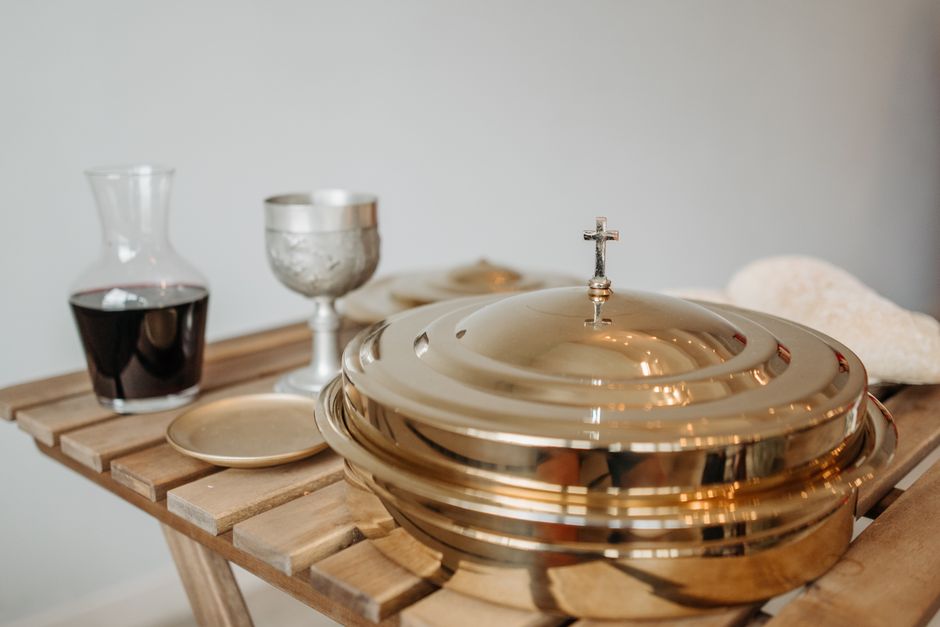
Matthew 26:39 — Meaning and Explanation
“And he went a little further, and fell on his face, and prayed, saying, O my Father, if it be possible, let this cup pass from me: nevertheless not as I will, but as thou wilt.”
In Gethsemane, Jesus experiences the crushing weight of bearing the world’s sin. The term “cup” (Greek: potērion, Strong’s G4221) is a common Old Testament metaphor for the wrath of God. Jesus, in His humanity, recoils from the prospect of being separated from the Father, yet His divine will remains perfectly aligned with the mission of redemption.
This verse is the quintessential model of prayer. It teaches us that honesty with God is not a lack of faith. Jesus brought His deepest anxieties to the Father, yet He surrendered His personal desire to the sovereign plan of God. For the believer, this is the ultimate act of worship: choosing the Father’s will even when it requires personal sacrifice.
Matthew 26:41 — Meaning and Explanation
“Watch and pray, that ye enter not into temptation: the spirit indeed is willing, but the flesh is weak.”
Jesus warns His disciples of the danger of spiritual lethargy during His hour of crisis. The word “watch” (Greek: grēgoreō, Strong’s G1127) carries the nuance of being vigilant, alert, and spiritually awake. He acknowledges the inherent tension in the human condition: the spirit desires to follow God, but the “flesh” (sarx, Strong’s G4561) is prone to failure.
The lesson is a call to active dependence on God. We are not expected to overcome temptation through sheer willpower, but through constant vigilance and prayer. When we recognize our own weakness, we become candidates for the power of the Holy Spirit, which alone can bridge the gap between our good intentions and our actions.
Matthew 26:75 — Meaning and Explanation
“And Peter remembered the word of Jesus, which said unto him, Before the cock crow, thou shalt deny me thrice. And he went out, and wept bitterly.”
Peter’s denial is a sobering look at the frailty of human courage. After boasting of his loyalty, Peter succumbed to the pressure of the moment. The “bitter weeping” mentioned here is a Greek construction indicating intense, agonizing grief. It was not a weeping of despair, but of repentance, signaling a broken heart that was ready to be restored.
This verse offers profound hope for the backslider. Even in our greatest failures, the memory of Jesus’ word serves as an instrument of grace. Peter’s life shows that while our failures are great, the mercy of Christ—who prayed for Peter’s faith to not fail (Luke 22:32)—is greater. It reminds us that repentance is the path back into the presence of God.

How to Apply Matthew 26 in Your Daily Life
Applying the lessons of Matthew 26 requires moving from the head to the heart. In your family, consider the example of the Last Supper. Just as Jesus washed feet and shared a meal, practice “table ministry” by intentionally creating space for vulnerable, Christ-centered conversations with your spouse or children. When conflicts arise, remember that the “flesh is weak” and extend the same grace to your family members that Christ extended to His sleeping disciples.
In the workplace, adopt the “Gethsemane posture.” When faced with ethical dilemmas or stressful deadlines, pause to pray, “Not my will, but Thine be done.” This mindset shifts your professional life from a pursuit of personal success to a witness of God’s sovereignty. When you fail or make a mistake, do not let shame paralyze you; like Peter, let the conviction of the Spirit lead you to “bitter” but restorative repentance, knowing that your identity is secure in Christ’s finished work.
A Prayer Based on Matthew 26
Guided Scriptural Prayer
Heavenly Father, I come before You today acknowledging my own weakness and the frailty of my flesh, just as the disciples did in the garden. Thank You for the cup that Jesus drank so that I might be reconciled to You. Help me to remain vigilant in prayer, keeping my heart alert to the temptations of this world. When I stumble or lose my way, grant me the grace of true repentance, that I may return to Your path with a renewed spirit. May my life reflect the prayer of my Savior: “Not my will, but Thine be done.” Amen.
Frequently Asked Questions About Matthew 26
What is the main message of Matthew 26?
The main message of Matthew 26 is the necessity of Christ’s suffering and the abandonment He endured to fulfill the plan of salvation. It highlights the contrast between human betrayal (Judas, Peter) and divine faithfulness (Jesus). By documenting the Last Supper, the agony in Gethsemane, and the trial before the Sanhedrin, Matthew demonstrates that Jesus was not a victim of circumstance, but a willing Savior who chose the cross to establish the New Covenant (Matthew 26:28).
Who was the primary audience for Matthew 26?
Matthew wrote his Gospel primarily for a Jewish-Christian audience who were familiar with Old Testament prophecy and the legal requirements of the Passover. Consequently, he emphasizes how Jesus’ actions in chapter 26—such as the institution of the Lord’s Supper and the betrayal by a disciple—fulfill specific prophecies. He presents Jesus as the true Passover Lamb, whose blood provides the ultimate atonement, validating the Christian faith as the logical and spiritual fulfillment of the Jewish covenant.
What does the “cup” mean in Matthew 26:39?
In Matthew 26:39, the “cup” represents the righteous judgment and wrath of God against sin. Throughout the Old Testament (e.g., Psalm 75:8, Isaiah 51:17), a cup is a symbol of divine judgment poured out upon the wicked. When Jesus asks for the cup to pass, He is expressing the horror of the sinless Son of God bearing the weight of human iniquity and experiencing the temporary separation from the Father that sin demands. His submission to the cup is the moment our salvation was secured.
May the truths of this chapter anchor your soul and deepen your love for the One who walked the path of the cross for you.