

Welcome to this deep-dive exploration of 1 Samuel chapter 1, a narrative that serves as the gateway to the era of the Hebrew monarchy. In these verses, we witness a poignant portrait of human suffering, the power of persistent prayer, and the sovereign hand of God orchestrating history through the life of a godly woman named Hannah.
1 Samuel 1 — Historical and Spiritual Context
1 Samuel 1 provides the historical backdrop for the transition from the period of the Judges to the establishment of the Israelite monarchy. Written likely by Samuel, Nathan, or Gad, this account depicts the spiritual decay of the priesthood under Eli and the faithfulness of a remnant amidst cultural instability. You can read 1 Samuel 1 on Bible Gateway to ground yourself in the narrative.
Theologically, this chapter is a masterclass in divine providence. It highlights that God is the author of life, capable of opening the “womb” of a barren nation just as He opened Hannah’s. For the modern believer, it serves as a reminder that our private agonies are never hidden from God and that He often uses our deepest personal trials to birth spiritual movements that impact generations.

Verse-by-Verse Commentary on 1 Samuel 1
1 Samuel 1:10 — Meaning and Explanation
“And she was in bitterness of soul, and prayed unto the Lord, and wept sore.”
The term “bitterness of soul” in the Hebrew text utilizes the word marah (Strong’s H4751), which carries the connotation of intense physical and emotional distress. Hannah was not merely experiencing temporary sadness; she was at the end of her emotional resources. Her reaction to Peninnah’s provocation was not to retaliate in kind, but to pour out her soul before the only One capable of changing her circumstances.
This verse teaches us that emotional honesty before God is a prerequisite for spiritual breakthrough. Hannah did not try to “pretty up” her prayer; she brought her tears and her deep-seated pain into the presence of the Almighty. When we are at our most vulnerable, we are often in the best position to experience the transformative power of God.
1 Samuel 1:11 — Meaning and Explanation
“And she vowed a vow, and said, O Lord of hosts, if thou wilt indeed look on the affliction of thine handmaid, and remember me, and not forget thine handmaid, but wilt have given unto thine handmaid a man child, then I will give him unto the Lord all the days of his life…”
In this verse, Hannah addresses God as Yahweh Sebaoth, or “Lord of hosts” (Strong’s H6635). This is the first time this title appears in Scripture, denoting God as the Commander of the armies of heaven. Hannah recognizes that the God who controls the vast celestial forces is also the God who hears the whisper of a woman in her private affliction.
Her vow is not a bribe; it is an act of total surrender. By promising to return her son to the Lord, she acknowledges that children are a heritage from God. She shifts her perspective from “my child” to “God’s servant,” a profound shift in mindset that every parent and believer should emulate in their own stewardship of life’s blessings.
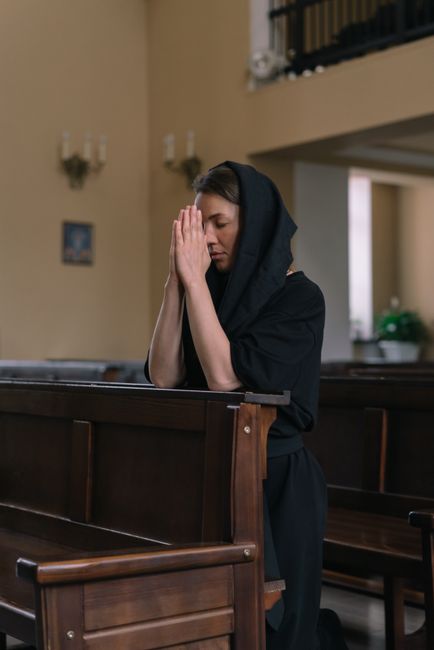
1 Samuel 1:15 — Meaning and Explanation
“And Hannah answered and said, No, my lord, I am a woman of a sorrowful spirit: I have drunk neither wine nor strong drink, but have poured out my soul before the Lord.”
When Eli the priest mistakenly accuses Hannah of drunkenness, she responds with dignity and clarity. The phrase “poured out my soul” is a beautiful metaphor for prayer. The Hebrew verb shaphak (Strong’s H8210) literally means to spill or empty out. She emptied her heart of its contents—her grief, her shame, and her longing—so that it could be filled with God’s peace.
This interaction emphasizes the importance of spiritual discernment. Eli, who was spiritually dim, failed to see the depth of Hannah’s devotion, yet Hannah remained focused on her vertical relationship with God. When we are misunderstood by men, we must ensure our hearts remain fully poured out before the Lord, who sees the heart when others see only the external.
1 Samuel 1:27 — Meaning and Explanation
“For this child I prayed; and the Lord hath given me my petition which I asked of him:”
The climax of the chapter is the realization of the promise. Hannah’s declaration is a testimony of faith rewarded. She acknowledges that the “petition” (the Hebrew word sheelah, Strong’s H7596) was granted not because of her own merit, but because of God’s grace. This verse serves as a bridge between the struggle of chapter 1 and the praise of chapter 2.
We learn here that God’s delays are not always denials. Hannah had to wait, endure, and suffer before she could hold Samuel. Her testimony serves as an encouragement for all who are currently in the “waiting room” of prayer. When the answer finally comes, the fruit of the prayer is all the sweeter because it was birthed through perseverance.

How to Apply 1 Samuel 1 in Your Daily Life
Applying 1 Samuel 1 today requires a shift in how we handle our “barren” seasons. Whether you are facing a professional setback, a relational drought, or a personal health crisis, follow Hannah’s lead by retreating to the place of prayer. Do not allow the “Peninnahs” of your life—the voices of criticism or the reminders of your inadequacy—to drive you to bitterness. Instead, let them drive you to the sanctuary.
In your professional life, practice “pouring out your soul.” Before a high-stakes meeting or when facing an impossible deadline, take a moment of silence to acknowledge that God is the Lord of Hosts, the One who manages the outcomes. By placing your work, your family, and your desires back into His hands, you transition from striving in your own strength to resting in His sovereign control.
A Prayer Based on 1 Samuel 1
Guided Scriptural Prayer
Heavenly Father, I come before You like Hannah, bringing my deepest burdens and the secret cries of my heart. I acknowledge that You are the Lord of hosts, and that nothing is too difficult for You to handle. Help me to trust Your timing, even when my situation feels barren or misunderstood. May I have the grace to surrender my most precious desires back to You, knowing that all I have is a gift from Your hand. Thank You for hearing the voice of my prayer and for being the God who sees me in my affliction. Amen.
Frequently Asked Questions About 1 Samuel 1
What is the main message of 1 Samuel 1?
The central message of 1 Samuel 1 is the sovereignty of God over human history and individual lives. It demonstrates that God hears the prayers of the afflicted and is capable of turning human sorrow into divine purpose. Through the story of Hannah, we see that God uses the “weak things” of the world to accomplish His plan; Hannah’s barrenness was the very condition that led to the birth of Samuel, a prophet who would change the course of Israel. The chapter highlights the importance of persistent, sincere prayer and the necessity of complete surrender to God’s will.
Why was Hannah so sad in 1 Samuel 1?
Hannah was deeply distressed because she was barren in a culture where childbearing was viewed as a primary sign of God’s favor. Furthermore, her husband Elkanah’s other wife, Peninnah, constantly provoked her, exploiting her inability to conceive to cause her deep emotional pain. As noted in 1 Samuel 1:6, Peninnah’s mocking was consistent and severe, causing Hannah to weep and lose her appetite. Her sadness was a combination of personal longing, social stigma, and the cruel treatment she endured within her own household.
What does “Lord of hosts” mean in 1 Samuel 1:11?
The title “Lord of hosts” (Hebrew: Yahweh Sebaoth) signifies God as the commander of the vast armies of heaven, including the angels and the celestial bodies. By using this title, Hannah is appealing to the supreme power of God. She is essentially saying, “The God who commands the universe is the same God who has the power to intervene in my small, personal life.” It is an act of supreme faith, recognizing that the One who governs the galaxies is also the One who cares about the individual heart.
May the peace of the Lord, who hears every prayer of your heart, be with you as you walk in His light.