

Welcome to this deep dive into one of the most profound chapters in all of Holy Scripture. In Isaiah 6, we witness the awe-inspiring throne room of God, the prophet’s radical transformation through confession, and the difficult but glorious call to ministry that echoes through the ages.
Isaiah 6 — Historical and Spiritual Context
Isaiah 6 marks a pivotal turning point in the ministry of the prophet Isaiah, occurring in the year of King Uzziah’s death, approximately 740 B.C. After a long and relatively prosperous reign, the nation of Judah faced a power vacuum and impending moral decay, setting the stage for Isaiah’s divine commissioning as he stood before the sovereign throne of the Almighty.
The overarching theme of this chapter is the holiness of God and the subsequent necessity of human humility and repentance before service can begin. For the modern believer, Isaiah 6 serves as a timeless reminder that true spiritual vision begins not with looking at our circumstances, but with looking at the Lord, which leads to a life of consecrated obedience. You can read Isaiah 6 on Bible Gateway to ground yourself in the text before we proceed.

The theological significance of this chapter cannot be overstated; it provides a blueprint for the “divine encounter” that every believer must experience to move from casual faith to radical surrender. While Isaiah was a prophet by trade, his encounter with the *Qadosh* (Holy One) reveals that the ministry of the believer is always preceded by an encounter with the character of God, which inevitably exposes the “uncleanness” of our own lips and hearts.

Verse-by-Verse Commentary on Isaiah 6
Isaiah 6:1 — Meaning and Explanation
“In the year that king Uzziah died I saw also the Lord sitting upon a throne, high and lifted up, and his train filled the temple.”
The death of King Uzziah represented the end of an era of stability for Judah, leaving the people in a state of national anxiety and uncertainty. By placing the “Lord” (Adonai) in contrast to the deceased earthly king, Isaiah emphasizes that while human thrones may crumble and earthly leaders may fall, the throne of God remains unshaken, sovereign, and eternally supreme over all human history.
The Hebrew word for “Lord” used here is *Adonai* (Strong’s H136), which denotes absolute authority and mastership. When Isaiah describes the Lord as “high and lifted up,” he uses the Hebrew term *rum* (Strong’s H7311), implying an exaltation that is far beyond human reach or comprehension. The “train” of His robe filling the temple signifies that God’s glory is not merely contained within a localized space; it is pervasive, overflowing, and overwhelming to the human senses.
Isaiah 6:3 — Meaning and Explanation
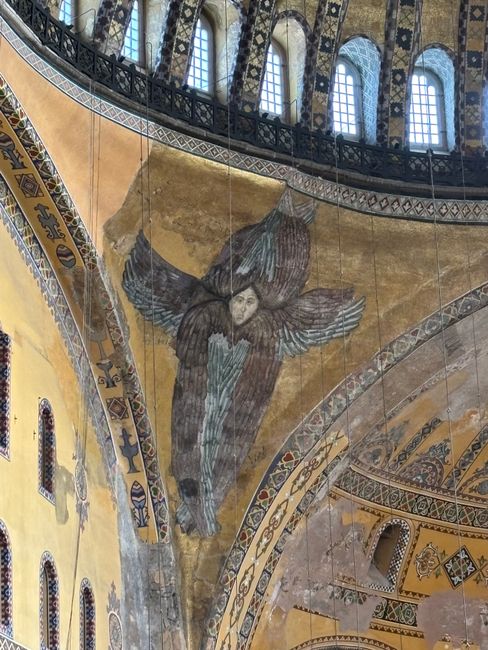
“And one cried unto another, and said, Holy, holy, holy, is the Lord of hosts: the whole earth is full of his glory.”
The tri-fold repetition of “Holy” (*qadowsh*, Strong’s H6918) is a superlative in Hebrew, emphasizing the absolute, superlative purity and set-apartness of God. This declaration by the seraphim serves as the central theological pillar of the entire book of Isaiah, framing God not just as powerful, but as morally perfect and transcendent, a reality that demands a response of total awe from the prophet.
The term “Lord of hosts” (*Yahweh Sabaoth*) speaks to God’s position as the commander of the angelic armies and the entire universe. By acknowledging that the “whole earth is full of his glory,” the seraphim are declaring that despite the apparent chaos of the political landscape in Judah, God’s majesty is still the fundamental reality governing the cosmos. For the believer, this verse is a call to recognize God’s holiness in our everyday lives, even when the world around us seems to be in disarray.
Isaiah 6:5 — Meaning and Explanation
“Then said I, Woe is me! for I am undone; because I am a man of unclean lips, and I dwell in the midst of a people of unclean lips: for mine eyes have seen the King, the Lord of hosts.”
Isaiah’s reaction to the vision of God’s holiness is immediate and visceral; he does not boast in his prophetic calling, but rather cries out in distress at his own inadequacy. The word “undone” is translated from the Hebrew *damah* (Strong’s H1820), which carries the connotation of being brought to silence, cut off, or destroyed, as the realization of his own sinfulness clashes with the perfection of the Divine.
This moment is the “great leveling” of the soul. No matter how righteous Isaiah thought he was compared to his neighbors, he realizes that in the presence of the *Melek* (King), his “unclean lips”—a synecdoche for his entire sinful nature—are utterly exposed. This is a vital lesson for every Christian: true spiritual growth does not come from comparing ourselves to others, but from catching a glimpse of the holiness of God, which drives us to our knees in confession and total dependence on His grace.
Isaiah 6:8 — Meaning and Explanation
“Also I heard the voice of the Lord, saying, Whom shall I send, and who will go for us? Then said I, Here am I; send me.”
After his lips were purged with the live coal from the altar, Isaiah is no longer “undone” but empowered for service. The Lord’s question, “Whom shall I send?”, is not a request for information—for God knows all things—but an invitation for the prophet to participate in the divine mission, transforming him from a passive spectator of God’s glory into an active messenger of His truth.
The Hebrew word for “send” is *shalach* (Strong’s H7971), which implies a commission or a formal dispatching with authority. Isaiah’s response, “Here am I; send me,” is the ultimate expression of yieldedness. He does not ask for the details of the mission, nor does he inquire about the success of the endeavor; he simply offers his availability. This is the hallmark of a true servant: the willingness to go wherever the Lord leads, regardless of the personal cost or the difficulty of the message. You can further explore the context of these passages at Blue Letter Bible.
How to Apply Isaiah 6 in Your Daily Life
Applying the lessons of Isaiah 6 begins with carving out moments of “holy silence” in your daily routine. In our hyper-connected world, we rarely pause to recognize the sovereignty of God. Whether you are navigating a stressful board meeting at work or managing the chaotic needs of your family, practice the “Isaiah pause.” Before reacting to a conflict, take a deep breath and remind yourself: “God is on the throne, and He is holy.” This shifts your perspective from being a victim of your circumstances to a servant of the Most High.
Furthermore, adopt a posture of “ready availability” in your spiritual walk. Often, we wait for a burning bush or a loud audible voice before we decide to serve God, but Isaiah’s call came as he was already in the temple, engaged in worship. Start by serving in the “small” areas of your life—offering a kind word to a difficult colleague, volunteering for a task at church that no one else wants, or being the first to apologize in a family argument. When you offer your “unclean lips” and your humble heart to God, He will use you to carry His message of hope to a world that desperately needs it.
A Prayer Based on Isaiah 6
Guided Scriptural Prayer
Heavenly Father, I stand before You in awe of Your holiness, confessing that I am often distracted by the “Uzziahs” of my own life—the things I rely on for security rather than relying on You. Please purge my heart and my lips, that I might speak only what is true and pure. Help me to see Your glory filling the earth even when my circumstances are dark and uncertain. When I hear Your call to serve, grant me the courage to say, “Here am I; send me,” regardless of the cost. May my life be a vessel for Your kingdom, bringing honor to Your name. Amen.
Frequently Asked Questions About Isaiah 6
What is the main message of Isaiah 6?
The main message of Isaiah 6 is the absolute holiness of God and the necessary human response of repentance and submission. The chapter contrasts the instability of earthly power (the death of King Uzziah) with the eternal, unchanging sovereignty of God. It teaches that before a person can be used by God, they must first experience a personal encounter with His majesty, which exposes human sinfulness and necessitates divine cleansing. Once purified, the believer is empowered to respond to God’s call with immediate, radical obedience, even when the task ahead is difficult.
Why did Isaiah say “Woe is me” in Isaiah 6:5?
Isaiah says “Woe is me” because he has just seen the Lord of hosts in His transcendent holiness. In the ancient Hebrew mindset, seeing God was thought to result in death for sinful humanity. Isaiah realizes that his own moral impurity—specifically his “unclean lips”—is completely incompatible with the perfection of the Divine. His cry is an act of total surrender and recognition that he is utterly incapable of standing in God’s presence on his own merit. It is the moment his self-sufficiency is shattered, making him ready to be transformed by God’s grace.
What does the “live coal” represent in Isaiah 6:6-7?
The live coal taken from the altar with tongs represents the purifying fire of God’s grace and the atonement for sin. In the Old Testament, the altar was the place of sacrifice and reconciliation between God and man. By touching the coal to Isaiah’s lips, the seraphim symbolizes that his sin has been “taken away” and his “iniquity purged.” This highlights that while we cannot cleanse ourselves, God provides the means for our purification. It is a powerful precursor to the Gospel, showing that we are made fit for God’s service only through His cleansing work, not our own efforts.
May this study of Isaiah 6 draw you closer to the throne of grace and embolden your walk with the King of Kings.