
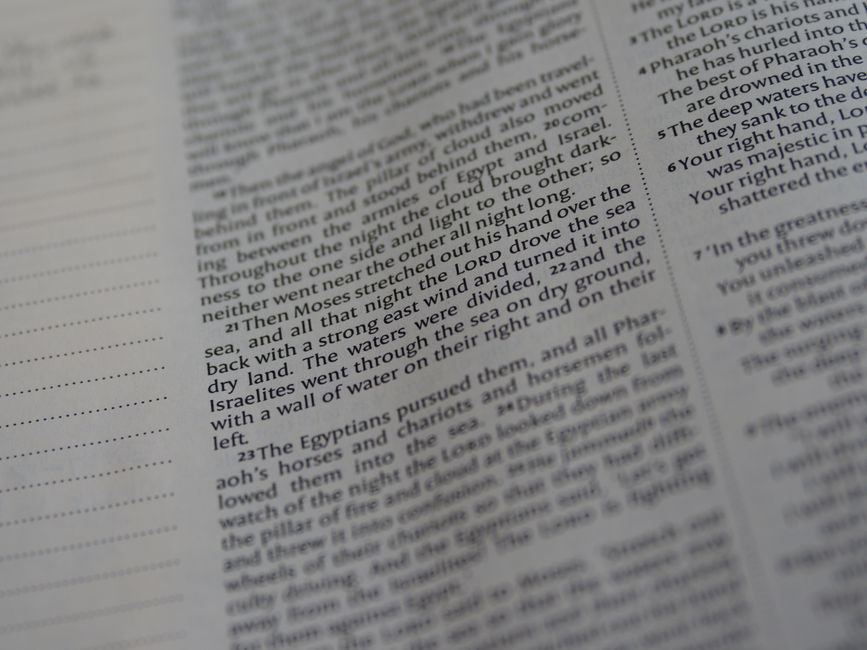
Welcome to this deep-dive study of Hebrews chapter 4, a profound passage that invites us into the “rest of God.” Together, we will unpack the theology of the Sabbath, the sharpness of the Word of God, and the compassionate intercession of our Great High Priest, Jesus Christ.
Hebrews 4 — Historical and Spiritual Context
Hebrews 4 was written to a community of Jewish Christians facing intense persecution and the temptation to return to the shadows of the Old Covenant. The author, likely writing before the destruction of the Jerusalem Temple in 70 AD, warns these believers against the “unbelief” that kept their ancestors from entering the Promised Land, urging them to hold fast to their confession.
The overarching theological theme of this chapter is the transition from the temporal rest of the Old Testament Sabbath to the eternal, spiritual rest found only in Jesus Christ. It matters today because it addresses the universal human struggle with burnout, anxiety, and the performance-based religion that keeps us from trusting fully in the finished work of our Savior. You can read Hebrews 4 on Bible Gateway to ground your heart in the text before we proceed.

Verse-by-Verse Commentary on Hebrews 4
Hebrews 4:1 — Meaning and Explanation
“Let us therefore fear, lest, a promise being left us of entering into his rest, any of you should seem to come short of it.”
The author begins with a solemn warning born out of pastoral care, emphasizing that the promise of divine rest is not merely a historical relic but a present-day reality for the believer. He uses the word “fear” (Greek: phobeomai, Strong’s G5399), which here implies a reverent, healthy caution rather than paralyzing terror, urging the reader to ensure their faith is genuine.
The “rest” mentioned here refers to the Greek katapausis, signifying a cessation from labor. Historically, the Israelites failed to enter God’s rest in Canaan because of their lack of faith. The spiritual lesson for us is that we must guard our hearts against the “hardening” of unbelief, ensuring that we do not trade the peace of Christ for the labor of religious works.
Hebrews 4:9 — Meaning and Explanation
“There remaineth therefore a rest to the people of God.”
This verse provides the theological climax of the chapter’s argument regarding the Sabbath. The Greek word translated as “rest” here is sabbatismos (Strong’s G4520), a unique term found nowhere else in the New Testament, which specifically refers to a “Sabbath-keeping” or a rest that mirrors God’s own rest after creation.
This implies that the rest we enjoy is not just a break from work, but a participation in the divine nature. By resting in Christ, we acknowledge that our salvation is not earned by our own efforts but is a gift received through grace. Matthew Henry notes that this “sabbatism” is a foretaste of the eternal rest awaiting the people of God in the world to come.

Hebrews 4:12 — Meaning and Explanation
“For the word of God is quick, and powerful, and sharper than any twoedged sword, piercing even to the dividing asunder of soul and spirit, and of the joints and marrow, and is a discerner of the thoughts and intents of the heart.”
This iconic verse reveals the living nature of Scripture. The word “quick” (Greek: zao, Strong’s G2198) means “alive” or “living.” Unlike human literature, the Bible possesses the supernatural ability to penetrate the deepest recesses of the human condition, acting as a diagnostic tool for the soul.
The “twoedged sword” (machaira distomos) represents the Word’s ability to cut through our self-deception and rationalizations. It separates the “soul” (our emotional/natural life) from the “spirit” (our God-breathed essence), exposing the hidden motivations behind our actions. As you consult the Blue Letter Bible, note that the term “discerner” (Greek: kritikos) is where we get our word “critic”—the Word of God is the ultimate judge of our true intentions.
Hebrews 4:16 — Meaning and Explanation
“Let us therefore come boldly unto the throne of grace, that we may obtain mercy, and find grace to help in time of need.”
This verse offers a stunning invitation to intimacy with the Father through the Son. Because Jesus, our Great High Priest, has been “tempted in all points like as we are, yet without sin” (v. 15), He is uniquely qualified to represent us. The phrase “come boldly” (Greek: parrhesia) suggests an openness and freedom of speech, a stark contrast to the fear that characterized the Old Covenant.
The “throne of grace” is a beautiful oxymoron; a throne is typically a place of judgment, but because of the cross, it has become a fountain of mercy. This is our anchor in every crisis. Whether you are dealing with a wayward child, a stressful work situation, or personal failure, you are invited to approach the throne, not as a trembling servant, but as a beloved child seeking the Father’s grace.
How to Apply Hebrews 4 in Your Daily Life
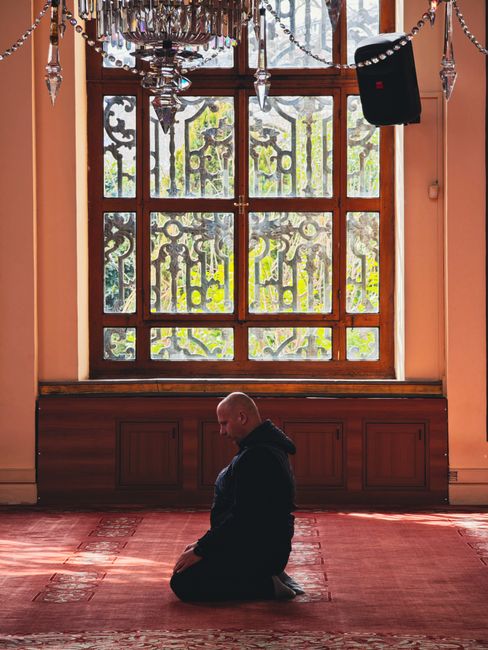
Applying Hebrews 4 begins with the practice of “Sabbath-rest” in your weekly rhythm. In a culture that idolizes productivity, choosing to stop working is an act of defiance against the lie that your value is tied to your output. If you are a professional, this might mean truly disconnecting from email on your day off, trusting that God is the one who sustains your career, not your constant checking of notifications.
In your family life, use Hebrews 4:12 as a filter for your interactions. When conflict arises, invite the “living Word” into the conversation. Instead of reacting with defense, pause and ask, “Lord, what are the intents of my heart in this argument?” By letting the Word discern your motivations, you model humility and grace, transforming your home into a place of rest rather than a battlefield of egos.
A Prayer Based on Hebrews 4
Guided Scriptural Prayer
Heavenly Father, I thank You that because of the finished work of Jesus, I can enter into the rest that You have prepared for Your children. Lord, please soften my heart so that I never drift away into the hardening of unbelief. I bring my anxieties and my labors to Your throne of grace, trusting that You see my struggles and are ready to provide mercy in my time of need. May Your Word remain a sharp, living light in my life, exposing my hidden thoughts and guiding me into Your truth. I rest in the assurance that You are my Great High Priest, who understands my weaknesses and loves me completely. Amen.
Frequently Asked Questions About Hebrews 4
What is the main message of Hebrews 4?
The main message of Hebrews 4 is the invitation for believers to enter into “God’s rest.” The author explains that this rest is not merely a cessation of work, but a state of trusting reliance on the finished work of Jesus Christ. By contrasting the unbelief of the Israelites in the wilderness with the faithfulness of Christ, the text warns us against missing out on this spiritual peace. It emphasizes that we serve a High Priest who is both divine and human, making Him the perfect mediator through whom we can find grace for every struggle.
Who wrote Hebrews and why?
While the authorship of Hebrews remains a subject of debate among scholars—with suggestions ranging from Paul to Apollos or Barnabas—the “why” is clear. It was written to Jewish Christians who were tempted to abandon their faith in Christ to return to the security of the Mosaic Law. The author writes to prove that Jesus is superior to angels, Moses, and the Levitical priesthood. By establishing the supremacy of Christ, the author encourages the readers to persevere through suffering and to look to Jesus as the ultimate source of their salvation and rest.
What does Hebrews 4:12 mean by “dividing asunder of soul and spirit”?
This phrase describes the surgical precision of the Word of God. The “soul” (Greek: psuche) relates to our natural human life, emotions, and intellect, while the “spirit” (Greek: pneuma) is the part of us that is regenerated by the Holy Spirit and communes with God. The Word of God acts as a spiritual scalpel, helping us distinguish between our natural, worldly desires and the leading of the Holy Spirit. It cuts away our self-centered rationalizations, revealing whether our actions are driven by the flesh or by a sincere desire to honor God.
May the peace of God, which surpasses all understanding, guard your heart and mind as you rest in Him.