

What Does the Bible Say About Faith in God?
The Bible presents faith in God as the foundational substance of the Christian life, defining it as the confident assurance of things hoped for and the conviction of realities not yet seen. It is not merely an intellectual assent to facts, but a transformative, active trust that anchors the soul in the character of the Almighty.
Scripture consistently teaches that faith is the primary mechanism through which humanity accesses the grace of God. In the Old Testament, faith is often synonymous with “waiting” or “leaning” upon the Lord, while in the New Testament, it is the active response to the Gospel of Jesus Christ. The Greek word pistis (Strong’s G4102), which is translated as “faith,” carries the weight of fidelity, conviction, and reliance. You can explore a deeper lexical analysis of this term at the Blue Letter Bible.
For the modern Christian, understanding faith is essential because we live in an era of skepticism and temporal distractions. True biblical faith acts as a spiritual compass, guiding believers through trials and uncertainties by shifting the focus from human limitations to divine omnipotence. It is a dynamic relationship that grows through the study of the Word and the testing of our resolve, ultimately leading to a life that honors God in both word and deed.
Most Powerful Bible Verses About Faith in God (KJV)
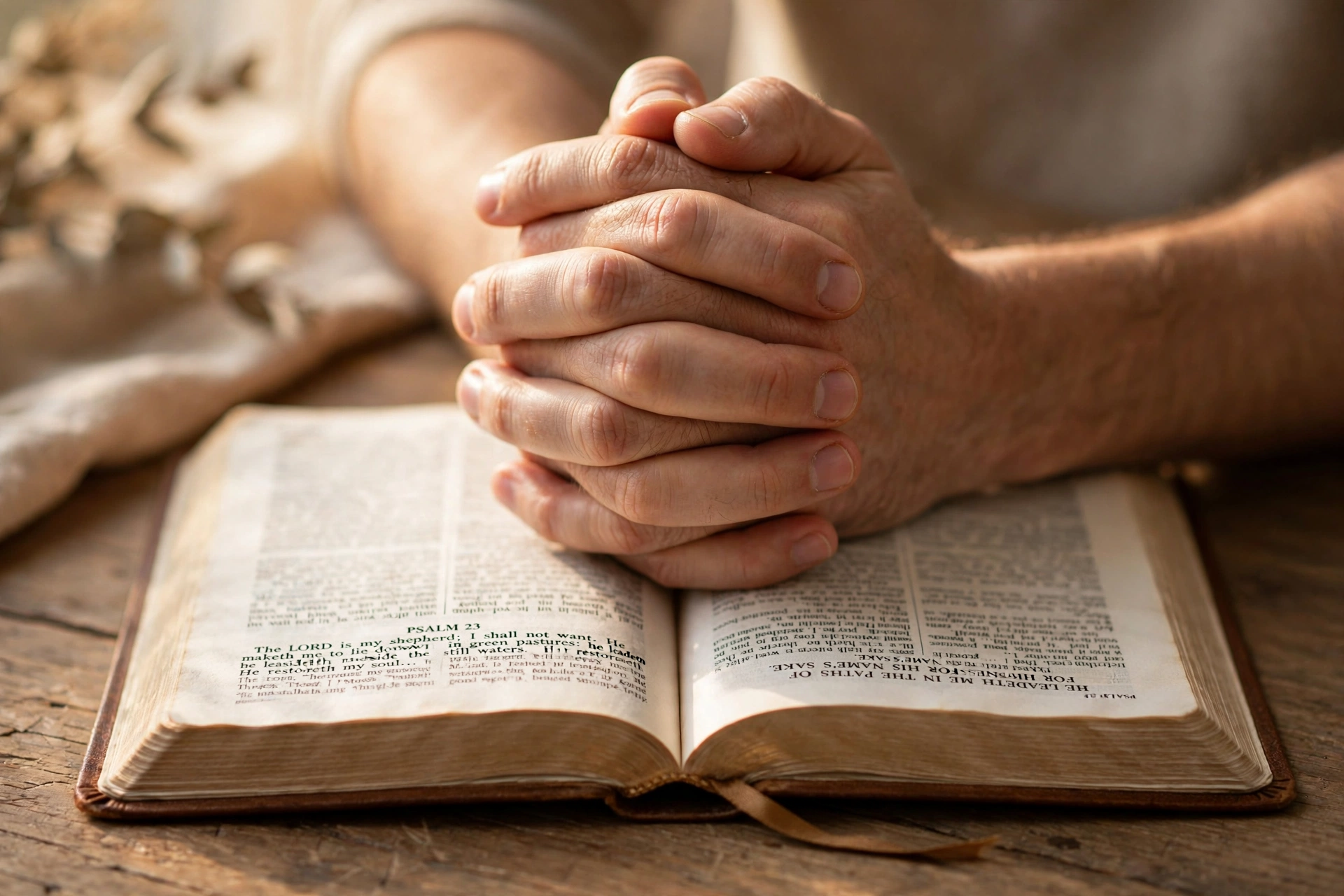
Now faith is the substance of things hoped for, the evidence of things not seen. Hebrews 11:1
The Epistle to the Hebrews was written to Jewish Christians who were facing severe persecution and were tempted to revert to the rituals of the Mosaic Law. The author provides this definition to encourage them to persevere, reminding them that the heroes of the faith in the Old Testament did not see the fulfillment of all God’s promises in their lifetime, yet they remained steadfast.
The Greek word for “substance” is hupostasis (Strong’s G5287), which can also mean “assurance” or “title deed.” It implies that faith provides a legal, spiritual reality to the promises of God before they are physically manifested. The word “evidence” (elegchos) suggests a proof or conviction that is so strong it leaves no room for doubt, even in the absence of tangible proof.
The modern application of this verse is clear: we must stop defining reality by our current circumstances. If we are struggling with loneliness, failure, or fear, faith teaches us that God’s presence is a “substance” more real than the emotions we feel. We are to live as if God’s promises are already accomplished facts, anchoring our identity in His eternal character rather than our temporal situation.
For we walk by faith, not by sight. 2 Corinthians 5:7
In his second letter to the Corinthians, the Apostle Paul addresses the necessity of a spiritual perspective in the face of human suffering. Paul acknowledges that the “outward man” perishes, but he encourages the believers to focus on the “inward man,” emphasizing that our earthly existence is temporary compared to the eternal glory that awaits those who trust in Christ.
The verb “walk” (peripateo, Strong’s G4043) refers to the totality of one’s lifestyle. When Paul says we walk by “faith” (pistis), he is contrasting it with “sight” (eidos, Strong’s G1491), which refers to sensory perception. The Greek construction implies that faith is the *means* or the *instrument* by which we move through life, rather than relying on the unreliable reports of our five senses.
Applying this today requires a constant recalibration of our minds. When we face financial instability or health crises, our “sight” tells us to panic. However, walking by faith requires us to acknowledge the facts of our situation while simultaneously acknowledging the greater truth of God’s sovereignty. It is a daily, intentional choice to prioritize what God says over what the world shows us.
And Jesus answering saith unto them, Have faith in God. Mark 11:22
This command from Jesus occurs during Holy Week, immediately after He cursed the fig tree and cleared the temple. The disciples were amazed that the fig tree had withered so quickly. Jesus used this moment to pivot their focus away from the miracle itself and toward the source of all power: God the Father.
The Greek phrasing here is emphatic, literally “Have the faith of God.” This suggests that the kind of faith believers are called to exercise is not a human-generated optimism, but a faith that originates from God Himself. It is a reliance on His nature—His power, His love, and His faithfulness—rather than our own ability to “believe hard enough.”
In practice, this means that when we face “mountains” in our lives, we are not tasked with manufacturing courage. Instead, we are commanded to look to God and trust in His nature. When you feel overwhelmed, stop trying to fix everything yourself and instead ask: “Do I believe that God is who He says He is?” If the answer is yes, then your faith is placed in the right Person, and that is sufficient.
Key Takeaways: Bible Verses About Faith in God
| Verse Reference (KJV) | Core Spiritual Message | How to Apply Today |
|---|---|---|
| Hebrews 11:1 | Faith gives substance to hope. | Stand firm on promises even when evidence is absent. |
| 2 Corinthians 5:7 | Life is guided by trust, not sight. | Filter decisions through prayer rather than panic. |
| Mark 11:22 | Faith rests in the character of God. | Shift focus from the problem to the Problem-Solver. |
How Can I Apply Bible Verses About Faith in God in My Daily Life?
When You Feel Overwhelmed at Work
When the pressure of deadlines and expectations mounts, pause to practice “the pause of perspective.” Before reacting, step away for one minute and recite Hebrews 11:1 silently. Remind yourself that your ultimate security is not in your performance or your boss’s opinion, but in your standing with God. Commit the outcome of your tasks to Him in a short, quiet prayer, acknowledging that He is the true Provider of your success.
When a Relationship Hurts
Relational pain often stems from placing our identity in the hands of fallible humans. When you feel wounded, practice “the transfer of expectation.” Shift your hope from the person who hurt you to God. Use 2 Corinthians 5:7 to remind yourself that while your eyes see rejection or betrayal, your faith sees a God who is the ultimate Healer and Comforter. Ask the Holy Spirit to help you forgive, knowing that your value remains untouched by others’ actions.
During Financial Hardship
In times of scarcity, the temptation is to live by “sight”—looking at the empty bank account and fearing the future. Instead, practice “the exercise of remembrance.” Keep a small journal where you record times God provided for you in the past. When anxiety rises, read these entries to build your faith. Apply Mark 11:22 by actively praising God for His past faithfulness, which bolsters your confidence that He will continue to provide for your needs according to His riches in glory.
A Prayer for Faith in God
Guided Scriptural Prayer
Heavenly Father, I come before You today acknowledging that my faith is often weak and easily shaken by the circumstances of this world. Please forgive me for the times I have prioritized what I see with my eyes over the eternal truths of Your Word. I ask that You would increase my faith, not by my own effort, but by the power of Your Holy Spirit working within me. Help me to grasp the substance of Your promises and to walk with the confidence that You are always in control.
Lord, when the mountains of life seem insurmountable, remind me to have faith in You, the Creator of the universe. May my life be a testament to the fact that I do not walk by sight, but by the steady hand of my Savior. Let my heart be anchored in Your character, knowing that You are the same yesterday, today, and forever. I place my future, my fears, and my hopes into Your capable hands. In the name of Jesus Christ, I pray, Amen.
Frequently Asked Questions About Faith in God in the Bible
Does the Bible say that faith is enough to move mountains?
Yes, Jesus teaches in Matthew 17:20 (KJV) that if you have faith as a grain of mustard seed, you shall say unto a mountain, “Remove hence to yonder place; and it shall remove.” This is not a metaphor for magic, but a profound statement about the power of God available to the believer. It teaches that even a small amount of genuine, God-centered faith is more powerful than the largest obstacles in our path. It highlights that the efficacy of our faith lies not in its volume, but in the greatness of the God in whom we believe.
Is it a sin to doubt God?
While the Bible encourages us to have unwavering faith, it also shows compassion for those struggling with doubt. In Mark 9:24, a father cries out to Jesus, “Lord, I believe; help thou mine unbelief” (KJV). This demonstrates that honesty with God about our struggles is not a sin, but a starting point for deeper trust. Doubt becomes a problem when we nurture it and turn it into a lifestyle of rebellion; however, bringing our doubts to God in prayer is a common part of the human experience that He is ready to address.
How does God grow our faith?
God often grows our faith through the “testing” of our resolve, as described in James 1:3 (KJV): “Knowing this, that the trying of your faith worketh patience.” Just as gold is refined in a furnace, our faith is strengthened when we are forced to rely on God in difficult situations. He provides trials—not to destroy us, but to strip away our self-reliance and force us to look to Him. By walking through these valleys, we learn by experience that He is faithful, which increases our capacity to trust Him in the future.
What is the difference between faith and positive thinking?
The difference is the object of our trust. Positive thinking relies on the power of the human mind or the belief that “things will work out” based on optimism. Biblical faith, as seen in Hebrews 11:1 (KJV), relies entirely on the character and promises of God. Positive thinking is often self-centered and focuses on desired outcomes, whereas biblical faith is God-centered and focuses on obedience to His will, even when the outcome is not what we originally hoped for or expected.