

What Does the Bible Say About Faith in God?
The Bible presents faith in God not merely as an intellectual acknowledgment of His existence, but as a total, transformative reliance upon His character, promises, and redemptive work. It is the foundational requirement for salvation and the essential engine for a life that pleases the Creator, serving as the bridge between human limitation and divine omnipotence.
In the Old Testament, faith is often captured by the Hebrew word emunah (Strong’s H530), which signifies steadfastness, fidelity, and reliability. This is perfectly illustrated in Habakkuk 2:4, where the righteous are described as living by their faithfulness—or more accurately, by their trust in God’s faithfulness. You can explore the depths of this term at the Blue Letter Bible. In the New Testament, the Greek term pistis (Strong’s G4102) moves beyond simple belief to imply a firm persuasion and a surrender of the will to Christ. This faith is active, not passive; it is a “conviction” that acts upon the truth of God’s Word regardless of visible circumstances.
Modern Christians often struggle with faith because they confuse it with positive thinking or emotional certainty. However, biblical faith is anchored in objective truth—the revealed Word of God. When we encounter trials, modern guidance requires us to return to the root of our faith: the person of Jesus Christ. By understanding faith as a relational commitment rather than a feeling, believers can maintain stability in a shifting world, trusting that God’s sovereign hand is guiding history toward His ultimate, redemptive conclusion.
Most Powerful Bible Verses About Faith in God (KJV)
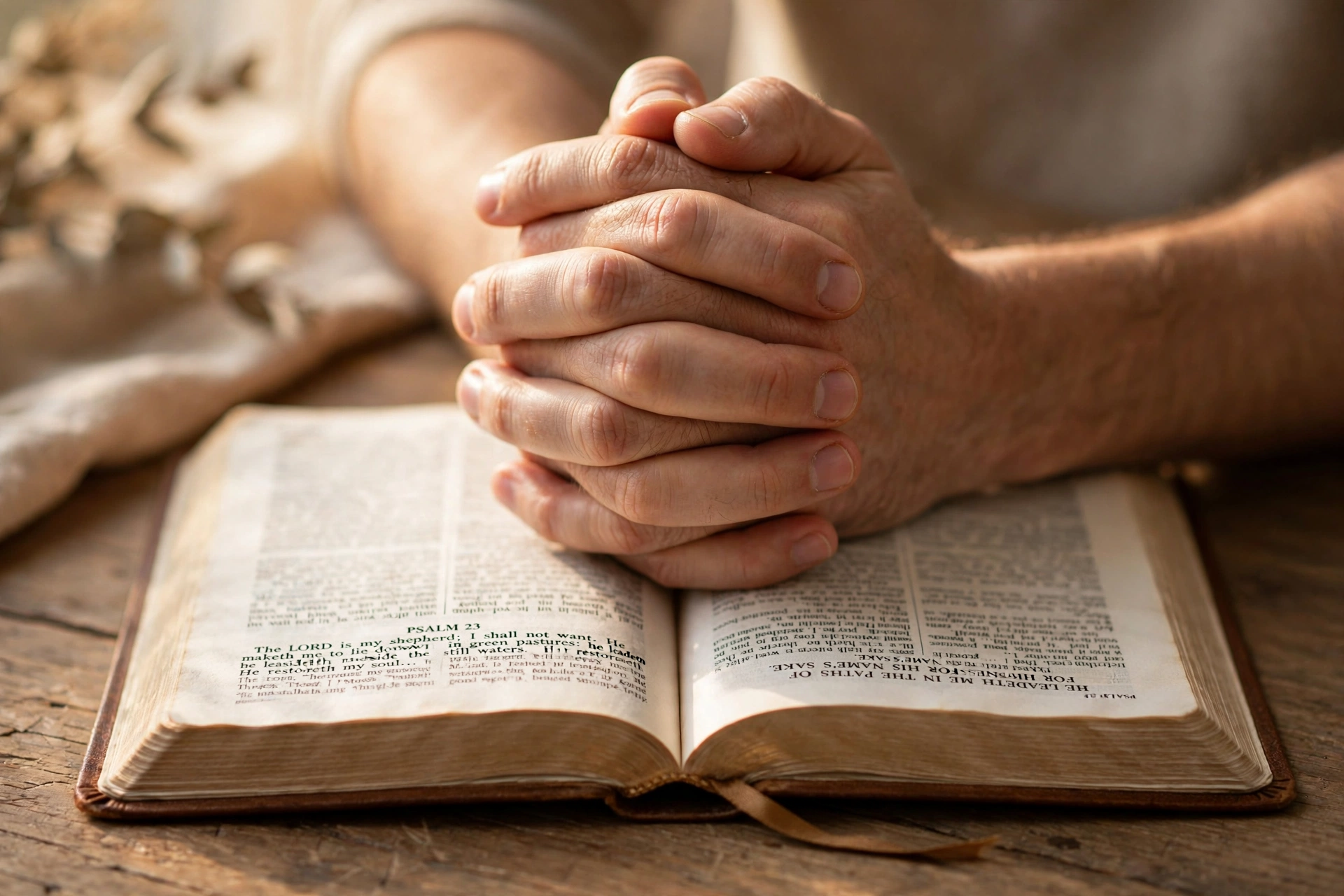
Now faith is the substance of things hoped for, the evidence of things not seen. Hebrews 11:1
The Epistle to the Hebrews was written to Jewish Christians who were tempted to return to the safety of the Mosaic Law to escape persecution. The author defines faith here as the bedrock of the Christian life. He encourages them to look past the physical suffering they were enduring to the eternal reality of God’s promises.
The Greek word for “substance” is hupostasis (Strong’s G5287), which Strong’s Concordance defines as a “setting under” or a “foundation.” It suggests that faith acts as the title deed to what we hope for. The term “evidence” (elenchos) refers to a proof or conviction that is so powerful it silences all doubt. Together, these words reveal that faith is not a guess; it is the spiritual reality that underpins our hope.
In our modern lives, we often demand tangible proof before we trust. Hebrews 11:1 calls us to reverse this process: we trust God’s character, and that trust becomes the proof of things we cannot yet see. Application involves anchoring your decisions in God’s revealed character rather than the changing tides of your current circumstances.
For by grace are ye saved through faith; and that not of yourselves: it is the gift of God. Ephesians 2:8
Paul writes to the church at Ephesus to emphasize the radical nature of salvation. He reminds them that they were once dead in their sins and that their recovery was not a result of their own merit, but a divine intervention. This verse serves as the theological anchor for the doctrine of grace.
The Greek word for “faith” here is pistis. Paul clarifies that even the ability to believe is a “gift” (doron) from God. This humbles the believer, removing any grounds for boasting. We do not manufacture our own faith; we receive it as the Holy Spirit draws us to the truth of the Gospel.
Applying this today means recognizing that your faith is not something you “do” to earn God’s favor, but something you “have” because God has reached out to you. When you feel your faith is weak, stop trying to muster up more strength and instead ask God, the Author and Finisher of faith, to increase your capacity to trust Him.
But without faith it is impossible to please him: for he that cometh to God must believe that he is, and that he is a rewarder of them that diligently seek him. Hebrews 11:6
The author of Hebrews continues his discourse on the nature of faith by setting a standard for divine approval. He asserts that a relationship with God is built entirely upon the expectation that God is who He says He is. Without this fundamental trust, our religious activities are merely empty rituals.
The term “diligently seek” comes from the Greek word ekzeteo (Strong’s G1567), meaning to search out with intensity or to crave. It implies an active, ongoing pursuit, not a casual glance. To “believe that he is” (pisteuo) involves a total acknowledgment of His existence and His nature as a covenant-keeping God.
The practical lesson here is that God is looking for hearts that are actively seeking Him. When you pray or read the Bible, are you doing it with the expectation that He is present and willing to reward your focus? True faith is a constant, intentional pursuit of His presence in every detail of your day.
Key Takeaways: Bible Verses About Faith in God
| Verse Reference (KJV) | Core Spiritual Message | How to Apply Today |
|---|---|---|
| Hebrews 11:1 | Faith is the foundation of spiritual reality. | Trust God’s promises even when your current situation contradicts them. |
| Ephesians 2:8 | Faith is a gift, not a human achievement. | When feeling spiritually dry, pray for God to strengthen your faith. |
| Hebrews 11:6 | God rewards those who seek Him diligently. | Make daily prayer and Bible study a priority, expecting God to meet you. |
How Can I Apply Bible Verses About Faith in God in My Daily Life?
When You Feel Overwhelmed by Uncertainty
When the future seems hazy, stop trying to predict the outcome and start anchoring your mind in God’s past faithfulness. Keep a “Faith Journal” where you write down one way God provided for you each day. By documenting His work, you create a tangible record of His character, making it easier to trust Him during times of stress.
When Your Prayers Seem Unanswered
Faith is not a transaction where we trade prayers for specific results. When you feel frustrated by silence, shift your focus from the “gift” to the “Giver.” Use your prayer time to recite the attributes of God—His sovereignty, His love, and His wisdom. This helps align your desires with His will, moving your heart from frustration to peace.
When You Are Facing a Major Life Decision
Do not make life-altering choices based on fear or convenience. Instead, apply the principle of “diligent seeking” (Hebrews 11:6). Spend three days in fasting and prayer, specifically asking God to open or close doors. If you are still unsure, wait on the Lord. True faith is often expressed in the willingness to wait for God’s timing rather than rushing into a decision.
A Prayer for Faith in God
Guided Scriptural Prayer
Heavenly Father, I come before You acknowledging that my faith is often small and easily shaken by the storms of this world. Please forgive me for relying on my own understanding instead of Your eternal, unchanging Word. As it is written in Ephesians 2:8, faith is a gift from You; I humbly ask that You increase my capacity to trust You, even when I cannot see the path ahead. Lord, help me to be one who seeks You diligently, knowing that You are a rewarder of those who truly pursue Your presence.
May my life be a living testament to the truth of Hebrews 11:1, where my hope in You becomes the substance of my daily actions. When I am weak, remind me that Your grace is sufficient and that Your power is made perfect in my infirmity. Strengthen my resolve to walk by faith and not by sight, holding fast to the promises You have given me in Christ Jesus. Amen.
Frequently Asked Questions About Faith in God in the Bible
Does the Bible say that faith is enough to move mountains?
Yes, Jesus explicitly teaches in Matthew 17:20 that if you have faith as a grain of mustard seed, you shall say to a mountain, “Remove hence to yonder place,” and it shall move. This is not a call to magical thinking; rather, it is a statement about the power of God available through a believer who is aligned with His will. The “mountain” represents the immovable obstacles in our lives. When our faith is placed in the omnipotence of God rather than our own ability, we access the divine power necessary to overcome seemingly impossible barriers.
Is it a sin to have doubts if you have faith?
The Bible treats doubt as a human struggle that should lead us to seek God more deeply, rather than as an unforgivable sin. In Mark 9:24, the father of a demon-possessed boy cries out, “Lord, I believe; help thou mine unbelief.” This man’s honesty was met with compassion, not condemnation. Doubt is often the shadow cast by a desire to know God more clearly. When you experience doubt, do not retreat; instead, bring those questions to God in prayer and search the Scriptures for the answers that will solidify your foundation.
How does God measure the strength of my faith?
God does not measure faith by the absence of struggle or the volume of our outward success, but by our obedience in the face of difficulty. In James 2:17, we are told that “faith, if it hath not works, is dead, being alone.” This means that the measure of your faith is found in your willingness to act upon what God has told you, even when it is inconvenient or difficult. God gauges the heart’s posture—the internal commitment to follow Him regardless of the cost—rather than the external magnitude of the results.
What is the difference between belief and biblical faith?
In a biblical context, mere belief is often described as an intellectual acknowledgment of facts—even the demons believe in God and tremble (James 2:19). Biblical faith, however, involves a total surrender of the soul to Christ. It is a relational commitment that transforms how you live, think, and love. While belief acknowledges that God exists, faith trusts God with your life, your future, and your eternal destiny. You can find comprehensive resources for studying these distinctions at Got Questions.