

What Does the Bible Say About Faith in God?
The Bible teaches that faith in God is the foundational response of the human heart to His revealed truth, characterized by an active, unwavering trust in His character and promises. It is not merely an intellectual assent to facts, but a total reliance on God that produces obedience and perseverance in every circumstance of life.
Scripture emphasizes that faith is both a gift from God and a necessary condition for a relationship with Him. In the Old Testament, the Hebrew word emunah (Strong’s H530), which can be studied further at Blue Letter Bible, signifies firmness, steadfastness, and integrity—the very essence of a life lived in reliance upon the Almighty. Faith is not a static belief system; it is a dynamic, living trust that sustained the patriarchs and prophets through trials, famines, and exile.
In the New Testament, the Greek term pistis (Strong’s G4102) moves the concept into the realm of the Gospel, where faith is the channel through which we receive the righteousness of Christ. Modern Christians often struggle with “functional atheism,” where we claim to believe in God but live as if He is absent. Reconnecting with the biblical definition of faith—a conviction so deep it dictates our actions—is essential for navigating the complexities of the 21st century. It is the victory that overcomes the world, turning our eyes from temporal anxieties to the eternal sovereignty of our Creator.
Most Powerful Bible Verses About Faith in God (KJV)
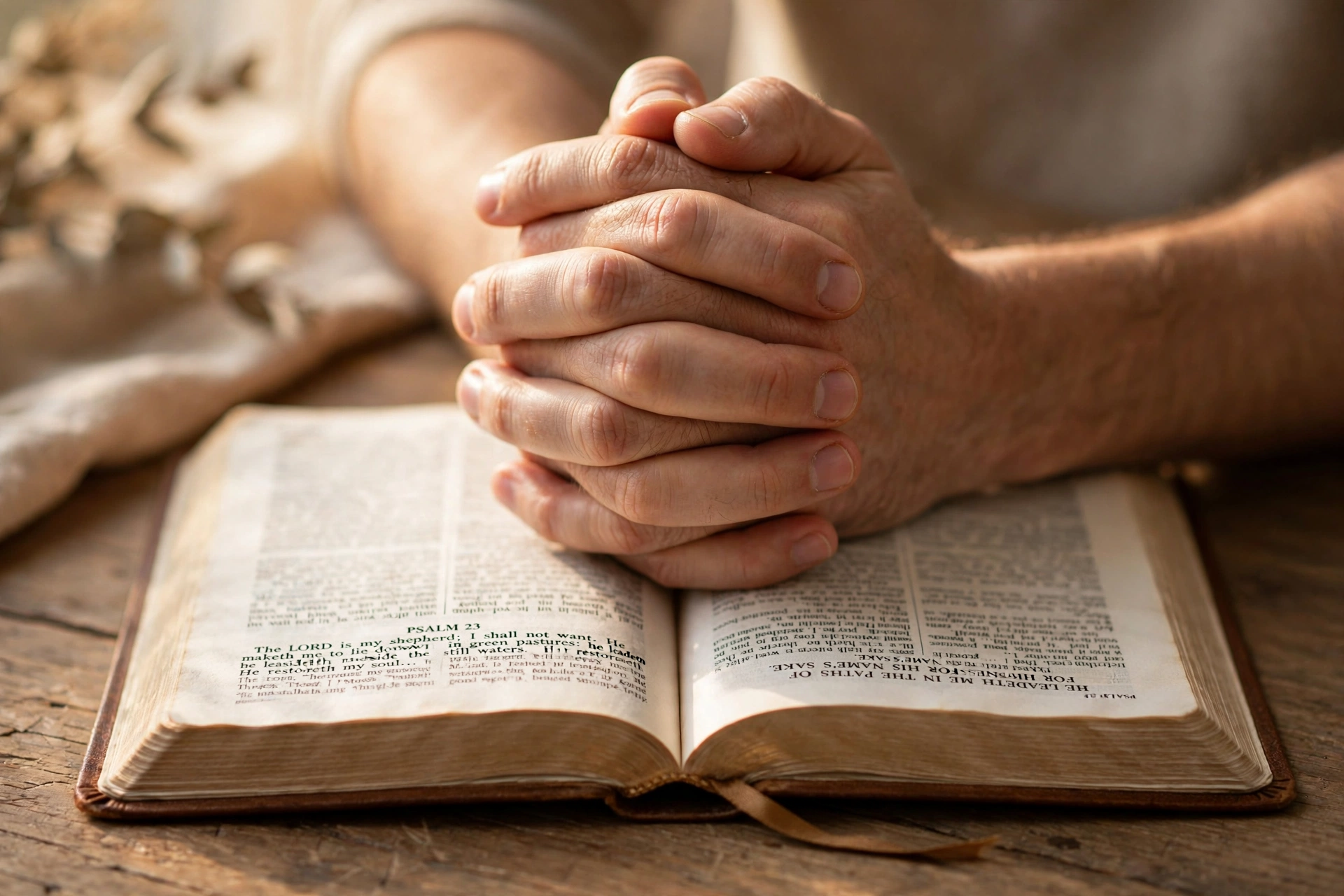
Now faith is the substance of things hoped for, the evidence of things not seen. Hebrews 11:1 (KJV)
This verse serves as the definitive biblical “definition” of faith, written by the author of Hebrews to encourage Jewish Christians who were tempted to return to the shadows of the Old Covenant under the pressure of persecution. The author reminds them that the spiritual reality of God’s promises is more “substantive” than the tangible world around them.
The word “substance” comes from the Greek hypostasis (Strong’s G5287), which carries the legal meaning of a “title deed” or “guarantee.” Just as a deed proves ownership of property not yet occupied, faith is the spiritual title deed to the promises of God. “Evidence” (elenchos) implies a conviction or proof that is so powerful it creates certainty in the mind of the believer, even when physical eyes see only obstacles.
Practically, this means that when you are facing a situation that seems hopeless, your faith is not “wishful thinking.” It is a firm, legal claim on what God has promised in His Word. We are called to live based on the “evidence” of God’s unchanging character rather than the “evidence” of our current circumstances.
For we walk by faith, not by sight. 2 Corinthians 5:7 (KJV)
The Apostle Paul wrote this to the church in Corinth, a city defined by worldly wisdom and sensory gratification. He contrasts the “outward man” who perishes with the “inward man” who is renewed day by day, urging the believers to look past the visible, temporary trials of life toward the invisible, eternal weight of glory.
To “walk” in Greek is peripateo, a term used to describe one’s general conduct or lifestyle. By using the negative “not by sight,” Paul warns against allowing our emotions, financial reports, or the opinions of others to dictate our spiritual direction. We are to walk by pistis (faith), relying on the guidance of the Holy Spirit and the revealed truth of Scripture as our map.
Modern application involves a shift in perspective. When we feel overwhelmed by bad news or personal failure, we must learn to pause and ask, “Am I reacting to what I see, or am I responding to what God has said?” Faith is the discipline of choosing God’s reality over our sensory experience.
But without faith it is impossible to please him: for he that cometh to God must believe that he is, and that he is a rewarder of them that diligently seek him. Hebrews 11:6 (KJV)
Following the account of Enoch, the author of Hebrews asserts that faith is the prerequisite for any meaningful approach to God. This was written to emphasize that religious activity, rituals, or outward morality are empty if they are not rooted in a genuine, trusting relationship with the Creator.
The phrase “diligently seek” translates the Greek ekzeteo, which implies an intense, persistent, and focused search, like someone hunting for a lost treasure. The Greek word for “believe” is pisteuo, which in this context denotes an active, self-surrendering trust rather than a mere intellectual agreement with the existence of a deity.
This teaches us that God is not looking for perfect people, but for seekers. If you feel your faith is weak, the remedy is not to try harder to “muster up” belief, but to begin diligently seeking Him in His Word and prayer. He promises to reward that persistence with a deeper manifestation of His presence.
Key Takeaways: Bible Verses About Faith in God
| Verse Reference (KJV) | Core Spiritual Message | How to Apply Today |
|---|---|---|
| Hebrews 11:1 | Faith is the legal title deed to God’s promises. | Treat God’s Word as more real than your bank account or health. |
| 2 Corinthians 5:7 | Our lifestyle is governed by truth, not appearances. | Stop making decisions based on fear; pray for God’s perspective first. |
| Hebrews 11:6 | God rewards those who pursue Him with persistence. | Set aside time daily for intentional, undistracted seeking of His face. |
How Can I Apply Bible Verses About Faith in God in My Daily Life?
When You Feel Overwhelmed at Work
When the pressure mounts and deadlines seem impossible, shift your focus from the workload to the Work-Giver. Start your morning by reciting Philippians 4:13 (KJV). Write down three things you are worried about, then write “God is sovereign over this” next to each one. This act of “casting your cares” transforms your workspace into a place of worship, reminding you that your career is a mission field, not a source of ultimate security.
When a Relationship Hurts
In the pain of betrayal or misunderstanding, it is natural to rely on your own defense mechanisms. Instead, practice “faith-based forgiveness.” Acknowledge that because God forgave you in Christ, you have the supernatural capacity to extend grace. Pray for the person who hurt you specifically, asking God to bless them. This isn’t about ignoring the pain; it’s about trusting that God is the ultimate Judge and Healer, releasing the burden of retribution into His hands.
During Financial Hardship
Financial stress is the greatest test of our reliance on God. Rather than obsessing over the deficit, engage in a “gratitude audit.” Look back at how God has provided in the past, even in small ways. Commit to tithing or giving a small amount even when it seems illogical—this is a tangible act of faith that breaks the power of mammon over your heart. Remind yourself that your provider is the Creator of the universe, not your employer or your savings account.
A Prayer for Faith in God
Guided Scriptural Prayer
Heavenly Father, I come before You acknowledging that my heart is often prone to worry and my eyes are too easily fixed on the storms of this life. Lord, increase my faith. Grant me the grace to see beyond the immediate trials and to rest in the unshakable reality of Your promises. Help me to walk not by the fleeting sight of my circumstances, but by the eternal truth of Your Word, knowing that You are the rewarder of those who diligently seek You.
I surrender my anxieties, my future, and my deepest needs into Your capable hands. Let my life be a living testimony of trust, reflecting the peace that surpasses all understanding. May I be found faithful, even when the path is dark, because I know that You are the light of the world. I ask this in the precious and powerful name of my Savior, Jesus Christ. Amen.
Frequently Asked Questions About Faith in God in the Bible
Does the Bible say that faith is enough to save me?
The Bible explicitly states in Ephesians 2:8 (KJV) that “by grace are ye saved through faith; and that not of yourselves: it is the gift of God.” This clarifies that salvation is entirely a work of God’s grace, received through the instrument of faith. However, true biblical faith is never “alone.” As James 2:17 explains, faith without works is dead. Therefore, while faith is the sole requirement for justification, it will naturally produce a transformed life and obedient actions as evidence of a genuine relationship with Christ.
Is it a sin to have doubts about my faith?
Doubting is not the same as unbelief; it is often a sign of a heart wrestling with the depth of God’s truth. In Mark 9:24 (KJV), a desperate father cries out, “Lord, I believe; help thou mine unbelief.” Jesus did not rebuke him; He honored his honesty and met his need. Doubts become sinful only when we use them as an excuse to turn away from God or reject His revealed truth. Instead of hiding your questions, bring them to God in prayer; He is strong enough to handle your inquiries and lead you into deeper understanding.
How does God build our faith when we are suffering?
God uses the fires of affliction to refine our faith, as gold is purified in a furnace. 1 Peter 1:7 (KJV) explains that the trial of our faith is much more precious than gold. Suffering strips away our reliance on worldly comforts and forces us to cling to the only thing that remains: the character of God. Through pain, we learn that God’s presence is sufficient even when the circumstances are not. Each trial is an invitation to trust Him in a new, deeper way, turning our theoretical belief into an experiential, rock-solid confidence in His goodness.
What is the difference between “saving faith” and “mental assent”?
Mental assent is merely agreeing that the facts of the Gospel are true, much like one might agree that a historical event happened. Saving faith, however, is a total surrender of the heart and life to the Lordship of Jesus Christ. As James 2:19 (KJV) notes, “the devils also believe, and tremble”—they have mental assent, but they do not have saving faith. Saving faith includes repentance, a turning away from sin, and a personal reliance on Christ’s sacrifice. It is a relationship of trust that changes who we are and how we live every single day.