
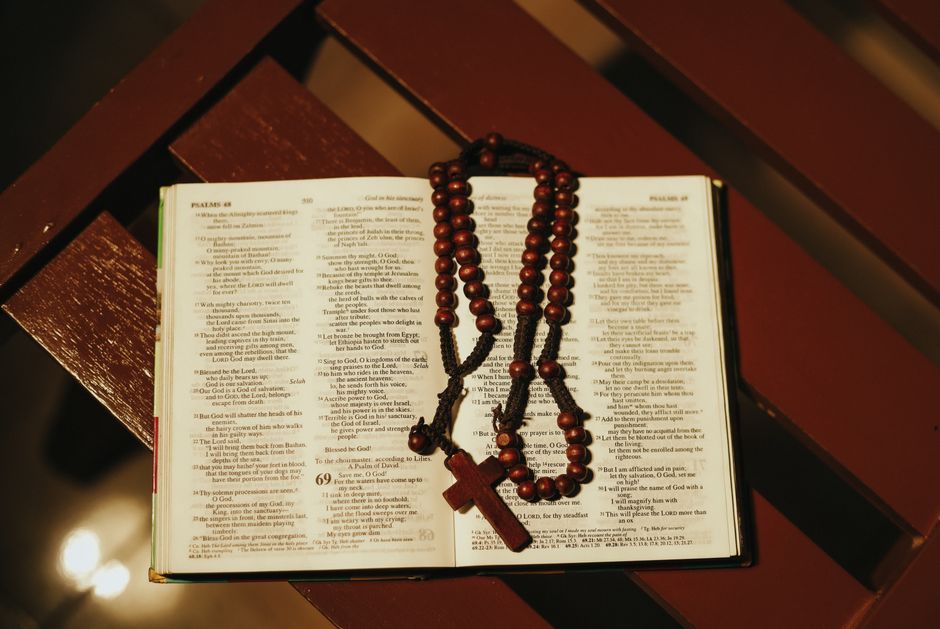
Welcome to this deep dive into the heart of the Songs of Ascent. In this study of Psalm 125, we will explore the themes of divine security, the unwavering stability of the believer, and the promise of God’s peace upon His people.
Psalm 125 — Historical and Spiritual Context
Psalm 125 is part of the “Songs of Degrees” or “Songs of Ascent” (Psalms 120–134), which were traditionally sung by pilgrims as they traveled to Jerusalem for the three great annual feasts. While the authorship is traditionally attributed to David, the context reflects the post-exilic struggles where the people of God faced external pressure and internal doubt. It serves as a monumental reminder of the unshakeable nature of those who place their trust in the Lord, contrasting the instability of the wicked with the eternal permanence of God’s covenant people. You can read Psalm 125 on Bible Gateway to ground yourself in the text before we begin our analysis.
Theologically, this psalm functions as a fortress for the weary soul, emphasizing that our security is not found in our circumstances, but in the character of God. In a world defined by volatility and shifting cultural tides, Psalm 125 provides a spiritual anchor. It teaches that the believer is shielded by the very presence of God, much like the mountains that surround Jerusalem. For the modern Christian, this chapter serves as a vital reminder that while the “rod of the wicked” may touch our lives, it shall not rest upon our inheritance, securing our hope in Christ’s ultimate victory.

Verse-by-Verse Commentary on Psalm 125
Psalm 125:1 — Meaning and Explanation
“They that trust in the LORD shall be as mount Zion, which cannot be removed, but abideth for ever.”
This verse establishes the foundational promise of the entire psalm: the security of the believer is tethered to the immutability of God. The Hebrew word for “trust” is batach (H982), which implies a state of being “careless” or “secure” because one has leaned their entire weight upon another. Just as Mount Zion stands as a permanent, immovable fixture in the topography of Israel, the believer who leans on the Lord gains a supernatural stability that transcends earthly circumstances.
The spiritual lesson here is a radical shift in identity. We are not defined by our ability to hold onto God, but by His ability to hold onto us. When the psalmist declares that the believer “cannot be removed,” he is emphasizing divine preservation. In the original language, the word for “removed” (mowt, H4131) suggests a shaking or a tottering. The child of God, though they may face tremors of life, is fundamentally anchored in the bedrock of Christ, who is the true Zion.
Psalm 125:2 — Meaning and Explanation
“As the mountains are round about Jerusalem, so the LORD is round about his people from henceforth even for ever.”
Geographically, Jerusalem was protected by a natural amphitheater of mountains, providing a strategic defense against invaders. The psalmist uses this imagery to illustrate the omnipresence of God’s protection. The Hebrew word for “round about” is cabiyb (H5439), signifying an all-encompassing circle. God does not merely watch us from a distance; He is our perimeter, our defense, and our enclosure.
This verse teaches that our security is total and continuous. It is not a fluctuating protection that depends on our performance; it is a “from henceforth even for ever” commitment. As noted in Blue Letter Bible resources, this imagery echoes the divine hedge placed around Job, though here it is extended to the entire covenant community. No matter the direction from which the enemy approaches, they must first encounter the presence of the Almighty before they can reach the soul of the believer.

Psalm 125:3 — Meaning and Explanation
“For the rod of the wicked shall not rest upon the lot of the righteous; lest the righteous put forth their hands unto iniquity.”
The “rod of the wicked” refers to the oppressive power or authority exerted by those who reject God. The Hebrew word for “rod” (shebet, H7626) often denotes a scepter of rule or a tool of chastisement. The promise here is that while the wicked may exert temporary influence, they shall not be allowed to remain or “rest” (nuwach, H5117) upon the inheritance of the righteous.
This is a profound pastoral comfort regarding the limits of suffering. God sets a boundary on our trials. The reason given—”lest the righteous put forth their hands unto iniquity”—reveals the heart of a compassionate Father. God knows that if the pressure were too great or too prolonged, our faith might fracture, leading us to compromise our integrity. He prunes us, but He does not allow the enemy to destroy the vine. He limits the duration of our trials so that we are not tempted beyond what we are able to bear.
Psalm 125:4 — Meaning and Explanation
“Do good, O LORD, unto those that be good, and to them that are upright in their hearts.”
After establishing our security, the psalmist transitions into a petition for God’s favor. The term “good” (tob, H2896) and “upright” (yashar, H3477) describe the character of those who are in covenant with God. This is not a request for material prosperity alone, but for the manifestation of God’s grace and righteousness in the lives of His people.
The spiritual application here is the necessity of a sincere heart. The “upright in heart” are those whose internal desires align with God’s external commands. When we ask God to “do good,” we are asking Him to sanctify us, to reveal His kindness in our circumstances, and to manifest His justice in our world. It is a prayer for the consistency of the inner life to match the security of our external standing in Christ.

How to Apply Psalm 125 in Your Daily Life
Applying Psalm 125 requires a daily recalibration of where you place your trust. In the workplace, when you face an unjust supervisor or a volatile market, remind yourself that the “rod of the wicked” has a restricted reach. Your career, your reputation, and your future are ultimately in the hands of the Lord, not your employer. Instead of reacting with fear or retaliation, practice the “uprightness of heart” mentioned in verse 4 by maintaining your integrity, trusting that God is the final arbiter of your success.
In your family life, use the imagery of the mountains surrounding Jerusalem to pray over your children and spouse. When the world feels overwhelming, visualize the Lord as a perimeter of protection around your home. This does not mean you will avoid all hardship, but it does mean you can face it with a settled spirit. Make it a habit to declare Psalm 125:1 during times of anxiety: “I am as Mount Zion—not because of my strength, but because of the One who surrounds me.” This shifts your focus from the storm to the Savior.
A Prayer Based on Psalm 125
Guided Scriptural Prayer
Heavenly Father, I thank You that my life is hidden in the shadow of Your strength and that I am as immovable as Mount Zion because I trust in You. Lord, I ask that You remain round about me and my family today, shielding us from the reach of the wicked and the pressures of this world. Please keep my heart upright, that I may never reach out my hand to iniquity when the way becomes difficult. Limit the trials I face, for You know my frame and that I am but dust. I rest in Your promise that Your peace is my inheritance, both now and forevermore. Amen.
Frequently Asked Questions About Psalm 125
What is the main message of Psalm 125?
The central message of Psalm 125 is the absolute security of the believer who places their trust in the Lord. It teaches that because God is unchangeable and ever-present, those who rely on Him share in His stability. The psalm contrasts the “mountain-like” permanence of the righteous with the “chaff-like” instability of the wicked. It provides assurance that even when life is difficult and the influence of the wicked seems dominant, God remains the ultimate Protector who will not allow His people to be permanently overcome or destroyed.
Who wrote Psalm 125 and why?
While the superscription does not explicitly name the author, tradition and scholarly consensus often link this to David or an anonymous Levite singer during the post-exilic period. It was written as a “Song of Ascent” to encourage pilgrims traveling to Jerusalem. The “why” is rooted in the need for spiritual fortification. Israel was often a small, vulnerable nation surrounded by hostile empires. This psalm was written to remind the people that their true defense was not the physical walls of Jerusalem, but the spiritual presence of the Almighty God surrounding them.
What does verse 3 mean in Psalm 125 regarding the “rod of the wicked”?
Verse 3 promises that the “rod of the wicked”—symbolizing oppressive power, persecution, or the temptation to sin—will not “rest” upon the righteous. The term “rest” implies a permanent or final occupation. While the righteous may endure temporary seasons of trial or external pressure, God promises to intervene before that pressure breaks their faith or forces them into sinful compromise. It is a profound declaration of God’s mercy, showing that He is intimately aware of our limits and will not allow the enemy’s influence to become our permanent reality.
May the peace of the Lord, who is round about you like the mountains, be your constant companion and your deepest comfort as you walk in His light.