

What Does the Bible Say About Faith in God?
The Bible teaches that faith in God is the foundational response of a human heart to His revealed truth, characterized by active trust, reliance, and obedience. It is not merely an intellectual assent to facts, but a total surrender of one’s life and future into the hands of the Creator.
Scripture consistently portrays faith as the mechanism through which humanity interacts with the divine grace of God. In the Old Testament, the Hebrew word emunah (Strong’s H530), often translated as “faithfulness” or “steadfastness,” carries the connotation of firmness and stability. It describes a person whose life is anchored in the character of God, much like a tree with deep roots (see Blue Letter Bible analysis of Emunah). In the New Testament, the Greek word pistis (Strong’s G4102) shifts the focus to a “persuasion” or “conviction” that results in action. Faith is not a static state; it is the evidence of things not seen and the substance of things hoped for.
For modern Christians, understanding faith is vital because we live in an age of skepticism and sensory dominance. We are often tempted to “walk by sight,” yet the Apostle Paul reminds us that we must live by faith. By grounding our identity in the promises of Scripture, we move from a transactional relationship with God to a covenantal one, finding peace that surpasses human understanding even when circumstances remain difficult.
Most Powerful Bible Verses About Faith in God (KJV)
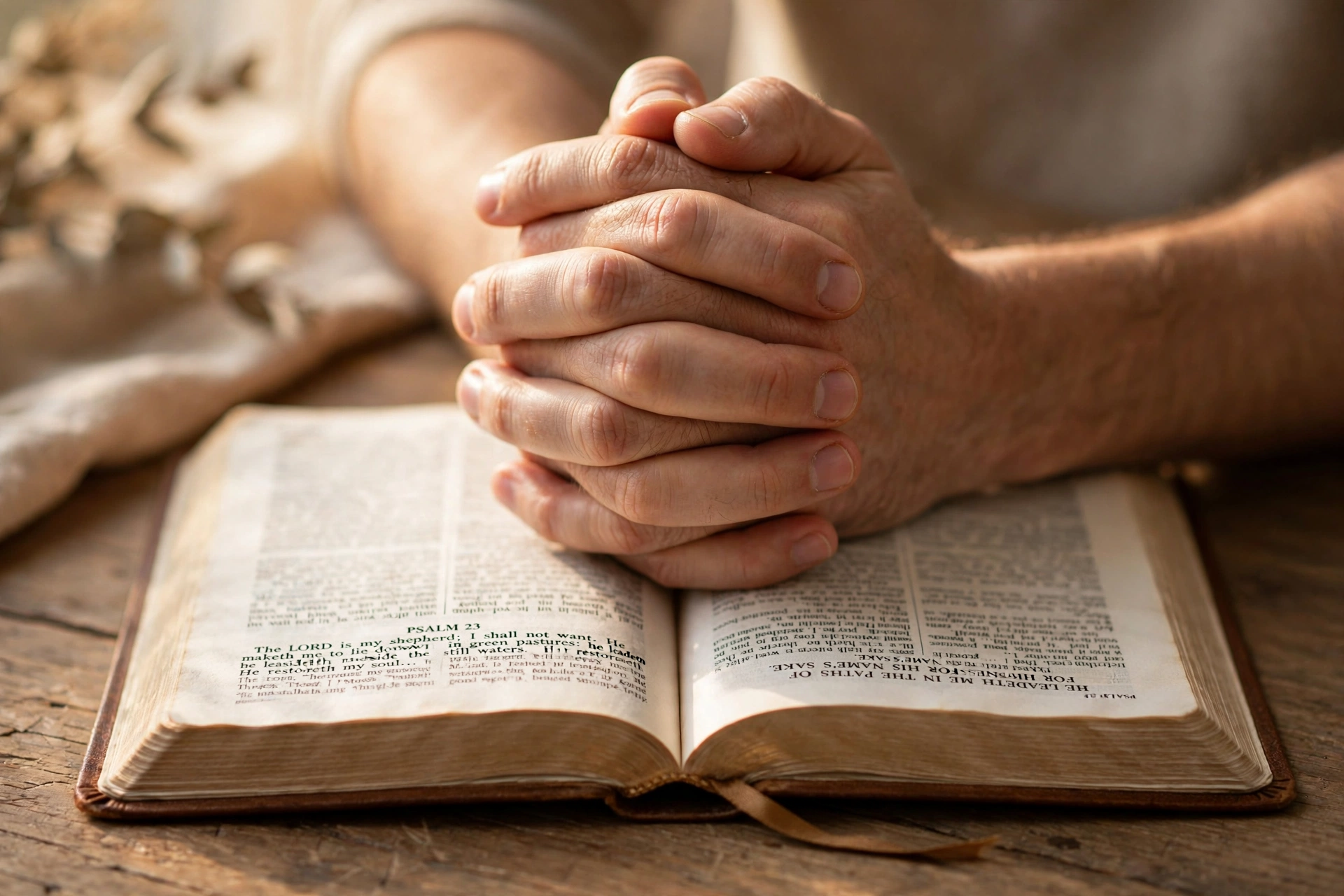
Now faith is the substance of things hoped for, the evidence of things not seen. Hebrews 11:1
The author of Hebrews wrote this letter to Jewish Christians who were facing intense persecution and the temptation to revert to the rituals of the Mosaic Law. By defining faith in chapter 11, the writer provides a “hall of fame” of Old Testament saints who triumphed through trust, encouraging the readers to persevere in their commitment to Christ despite the social and physical costs.
The Greek word for “substance” is hupostasis (Strong’s G5287), which can also mean “title deed” or “guarantee.” It implies that faith provides the legal, spiritual reality of what God has promised before it manifests physically. The word for “evidence” is elegchos, implying a conviction or proof that is so profound it silences doubt. Together, these words suggest that faith is the spiritual anchor that holds firm when the senses suggest otherwise.
The modern application is to recognize that your current struggles do not define your reality. If God has spoken a promise in His Word, it is as good as done. Faith is the internal confidence that allows you to act today based on the reality of God’s tomorrow, regardless of the visible evidence in your bank account, health, or relationships.
For we walk by faith, not by sight: 2 Corinthians 5:7
Paul the Apostle wrote these words to the Corinthian church to contrast our earthly existence with our eternal hope. He acknowledges that while we are “at home in the body,” we are “absent from the Lord.” The Corinthians were struggling with worldly wisdom; Paul reminds them that the spiritual life requires a different orientation than the physical life.
In the original Greek, “walk” is peripateo, referring to one’s daily conduct or lifestyle. The contrast is between the physical “sight” (eidos) and the spiritual “faith” (pistis). Paul is arguing that relying on our limited human perception (sight) is an insufficient guide for the believer. We are called to regulate our daily decisions by the unchanging character of God rather than the fluctuating circumstances of the world.
Applying this means intentionally pausing during moments of panic or confusion. When you feel overwhelmed, ask yourself: “Am I reacting based on what I see, or am I responding based on what God has promised?” This shift in perspective transforms anxiety into prayer, as you align your emotions with the truth of God’s sovereignty.
For by grace are ye saved through faith; and that not of yourselves: it is the gift of God: Ephesians 2:8
Paul’s letter to the Ephesians serves as a profound theological treatise on the nature of salvation. He addresses both Jews and Gentiles, emphasizing that the barrier of sin was broken by Christ. By stating that salvation is a gift, Paul humbles the believer, removing any grounds for human boasting or reliance on good works as a means of earning divine favor.
The word “grace” is charis (Strong’s G5485), representing unmerited favor. The “faith” mentioned here is the conduit through which that grace is received. It is important to note that even the faith itself is described as a “gift” (doron), meaning that God provides the very capacity to believe in Him. It is a complete work of divine initiation.
This verse is the ultimate antidote to spiritual burnout. If you are struggling with feelings of inadequacy or the fear that you haven’t “done enough” for God, return to this truth. Your standing with God is not based on your performance, but on the sufficiency of Christ, received by faith. Rest in the reality that you are loved not for what you do, but for Whose you are.
Key Takeaways: Bible Verses About Faith in God
| Verse Reference (KJV) | Core Spiritual Message | How to Apply Today |
|---|---|---|
| Hebrews 11:1 | Faith is the legal title deed to God’s promises. | Write down a promise from Scripture and pray it over your current situation daily. |
| 2 Corinthians 5:7 | Conduct your life by God’s truth, not your feelings. | When faced with bad news, pray before you react, asking for God’s perspective. |
| Ephesians 2:8 | Salvation is a gift, not a wage earned by labor. | Stop trying to “earn” God’s love and spend time simply thanking Him for His grace. |
How Can I Apply Bible Verses About Faith in God in My Daily Life?
When You Feel Overwhelmed at Work
When professional pressures mount, it is easy to succumb to the “sight” of deadlines and human criticism. Start your morning by reciting Psalm 56:3: “What time I am afraid, I will trust in thee.” Before opening your email or entering a meeting, take sixty seconds to breathe and visualize placing your tasks into God’s hands. Remind yourself that your identity is in Christ, not your output, and that He is the ultimate provider of your success.
When a Relationship Hurts
Relational discord often shakes our faith in God’s goodness. In these moments, practice “forgiveness by faith.” You may not feel like forgiving, but faith is an act of the will, not an emotion. Choose to release the debt of the other person by praying, “Lord, I cannot forgive this in my own strength, but by faith in Your grace, I release them to You.” This prevents bitterness from taking root and allows you to remain in a state of spiritual peace regardless of the other person’s actions.
During Financial Hardship
Financial scarcity is a primary test of faith. Instead of fixating on the lack, practice the discipline of “gratitude-based prayer.” Even if your resources are low, recount three specific ways God has provided for you in the past. Use the principle of 2 Corinthians 5:7 to look beyond the bank statement and toward the God who owns “the cattle on a thousand hills” (Psalm 50:10). This shifts your focus from the problem to the Provider.
A Prayer for Faith in God
Guided Scriptural Prayer
Heavenly Father, I come before You acknowledging that my faith is often weak and easily shaken by the circumstances of this world. I ask that You would increase my faith, helping me to see beyond the visible evidence of my struggles and into the eternal reality of Your promises. Lord, let Your Word be the anchor of my soul, keeping me steady when the winds of life blow against me. I surrender my need for control and choose to trust in Your perfect, sovereign plan for my life.
Thank You for the gift of salvation and for the grace that covers my many failures. Help me to walk by faith and not by sight, finding my security in the finished work of Jesus Christ. May my life be a testimony to Your faithfulness, reflecting the peace that only comes from knowing You. I place my future, my family, and my heart into Your capable hands, believing that You are working all things together for my good. Amen.
Frequently Asked Questions About Faith in God in the Bible
Does the Bible say that faith can move mountains?
Yes, Jesus explicitly uses this metaphor in Matthew 17:20 (KJV), stating, “If ye have faith as a grain of mustard seed, ye shall say unto this mountain, Remove hence to yonder place; and it shall remove; and nothing shall be impossible unto you.” This teaching is not an endorsement of magic or personal whim, but a declaration of the power of God available to those who align their wills with His. Moving a “mountain” refers to overcoming seemingly insurmountable obstacles or spiritual barriers when we rely on God’s authority rather than our own limited human capability.
Is it a sin to have doubts if I have faith in God?
The Bible does not treat doubt as an unforgivable sin, but rather as an opportunity for deeper growth. We see this in the account of the father in Mark 9:24 (KJV) who cried out, “Lord, I believe; help thou mine unbelief.” His honest admission of doubt was met with compassion by Jesus. Faith is not the absence of doubt; it is the choice to trust God in the presence of doubt. Bringing your questions and hesitations to God in prayer is a form of faith because it demonstrates that you are looking to Him for the answer.
How does God reward those who have faith?
The primary reward for faith in God is the assurance of salvation and an intimate, eternal relationship with Him (John 3:16). Hebrews 11:6 (KJV) states that “he is a rewarder of them that diligently seek him.” While the world often defines “reward” in terms of material prosperity, the Bible defines it as spiritual fruit, peace, wisdom, and the presence of the Holy Spirit. Faith brings the reward of being transformed into the image of Christ, which is a treasure that the world can neither give nor take away.
What is the difference between “saving faith” and “dead faith”?
The distinction is found in the Epistle of James, which teaches that “faith without works is dead” (James 2:20, KJV). Saving faith is a living, active trust in Jesus Christ that naturally produces a change in behavior and a desire to obey God. In contrast, a “dead faith” is merely intellectual—a mental agreement that God exists without any corresponding change in life or heart. True faith is essentially transformative; if there is no fruit of obedience or change in character, the Bible suggests that the faith in question may not be a genuine, saving faith at all.